
July 17, 2026
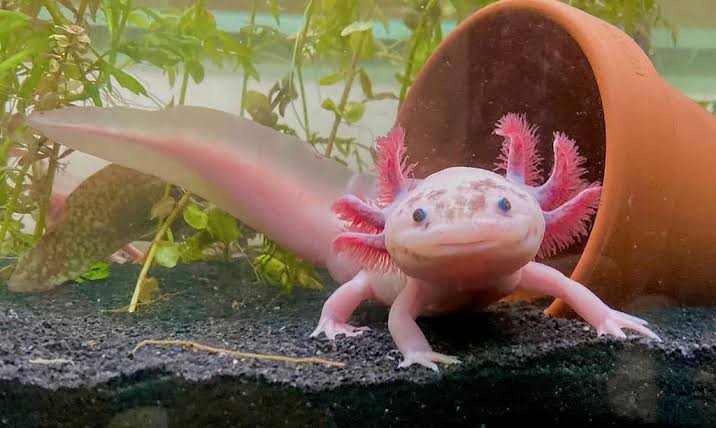
The scientific community continues to be captivated by the extraordinary regenerative capabilities of the axolotl, a remarkable creature that possesses the ability to perfectly regrow its own heart. This phenomenon, which seems like science fiction, is at the forefront of medical research as scientists work to translate the axolotl’s secrets into groundbreaking therapies for human healing. The implications are profound, suggesting that the very blueprint for regeneration may already exist within the human body, merely waiting to be activated.
The axolotl (Ambystoma mexicanum), a neotenic salamander native to Mexico, has emerged as an exceptional model organism in the field of regenerative medicine. Unlike humans, who form scar tissue at injury sites, axolotls can regenerate entire limbs, portions of their heart, spinal cord, brain, and other organs without any scarring . This process is underpinned by the formation of a blastema, a mass of progenitor cells that can rebuild complex structures, and is facilitated by a unique immune environment . Central to this ability is the axolotl’s skin mucus, a rich source of bioactive molecules including antimicrobial peptides and growth factors. Recent research highlights that this mucus possesses anti-inflammatory, wound-healing, and even anticancer properties, making it a promising source for developing bio-inspired therapies for infection management and wound repair .
For decades, the axolotl’s powers were thought to be a unique biological trick, but recent genetic mapping has revealed a surprising truth: humans and axolotls share much of the same biological architecture. Key components like the Shox gene, which directs limb growth, and signaling pathways involving retinoic acid are present in both species . This crucial discovery suggests that the fundamental machinery for complex regeneration is not unique to salamanders but is a conserved trait that humans possess but simply do not activate after embryonic development. The primary obstacle standing between humans and regenerative healing is our biological tendency to form scar tissue. While axolotls reprogram their cells to trigger perfect regrowth, human bodies prioritize rapid sealing via scarring, which effectively silences the regenerative program . Harvard researchers have confirmed that humans carry closely related regeneration genes, with the critical difference being activation—in axolotls, these genes switch on after injury, while in humans, the pathways remain largely dormant .
The scientific community is now intensely focused on understanding and overcoming this “scar barrier.” The goal is to design drugs or gene therapies that can soften human scars and reopen developmental pathways like retinoic acid-Shox signaling . A major area of study involves understanding the specific genetic and cellular programs the axolotl uses. A comprehensive study published in Science Advances in early 2026 revealed that during tail regeneration, muscle stem cells revert to an embryonic mesoderm-like state, giving them the flexibility to contribute to multiple tissue types—a flexibility not seen in limb regeneration, which is more restricted . This illustrates that regeneration is not a single process but involves divergent mechanisms depending on the body part. Furthermore, recent research published in Nature Communications established a targeted cell ablation system in axolotls, identifying ependymoglial cells as the sole source of central nervous system regeneration and proving that their depletion leads to regeneration failure . This provides a powerful tool for dissecting the roles of specific cell types in regeneration.
The link between injury, stress, and regeneration is also being carefully studied. A 2026 study in Lab Animal characterized the axolotl’s adrenal stress response, discovering that both cortisol and corticosterone play distinct and complex roles in response to amputation injury . Understanding these stress pathways is crucial, as they are temporally linked to the injury that initiates regeneration and may provide injury-specific signals.
The research has reached a pivotal point where the potential for human application is being clearly articulated. The shared genetic architecture and the discovery of “SP genes” in a cross-species study involving axolotls, zebrafish, and mice point to a “universal genetic program” for regeneration . Scientists are now investigating how to bypass the “scar barrier” and reactivate dormant pathways involving genes like Catalase and FETUB to reprogram wound sites toward regeneration instead of scarring . This is not about adding new genetic machinery but about flipping existing biological switches to give human cells “permission” to rebuild, potentially transforming treatments for spinal cord injuries, organ damage, and joint destruction . As we look at the axolotl in 2026, we are not just witnessing a biological marvel; we are looking at a roadmap that could guide the future of medicine, unlocking healing powers that have been dormant in our own genomes.