
July 6, 2026
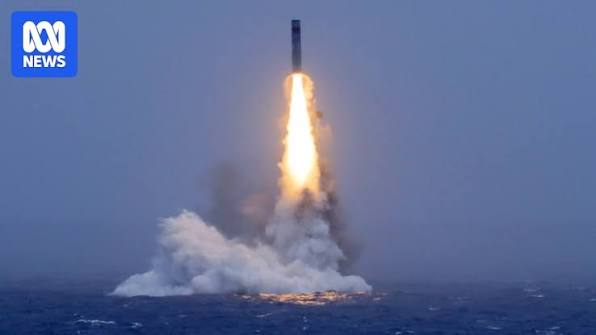
The People’s Liberation Army (PLA) Navy conducted a landmark test launch of a strategic missile from a nuclear-powered submarine, marking its most significant public display of sea-based nuclear capability in nearly four decades . The test, which took place at 12:01 p.m., saw a nuclear-capable intercontinental ballistic missile (ICBM) launched from an undisclosed location in the Pacific Ocean, carrying a dummy warhead that “precisely hit the designated target waters” . This event represents a major leap forward for China’s nuclear deterrent, with experts widely identifying the tested missile as the advanced JL-3, a third-generation submarine-launched ICBM officially unveiled in September 2025 .
The JL-3 is believed to have a range exceeding 10,000 kilometers, covering vast areas of the Pacific, and is capable of carrying multiple warheads with strong penetration capabilities, making it a formidable asset for China’s strategic arsenal . The test was publicly acknowledged by the PLA Navy just 59 minutes after the launch, a rapid and transparent disclosure that underscores Beijing’s confidence in its military capabilities . This event is being interpreted not merely as a technical achievement but as a powerful signal of China’s maturation into a comprehensive nuclear power, capable of projecting power and ensuring a credible second-strike capability, which is the cornerstone of its nuclear deterrence strategy .
The official statements from the Chinese government and military were careful to frame the launch within the context of routine training and international norms. The PLA Navy confirmed that relevant countries had been notified in advance of the test, a move that a Chinese defense spokesperson cited as evidence of the openness and transparency of the Chinese armed forces . The test was described as a routine arrangement of annual military training, compliant with international law and established international practice, and “not directed at any specific country or target” .
Furthermore, officials reiterated China’s long-standing commitment to a defensive national defense policy and a nuclear strategy of self-defense, emphasizing that it keeps its nuclear capabilities at the minimum level required for national security and does not engage in an arms race with any other country . Chinese Foreign Ministry spokesperson Mao Ning echoed these sentiments, stating that the entire operation was conducted in a safe, standardized, and professional manner and urged relevant countries “not to overinterpret” the event . This controlled and transparent messaging appears designed to project an image of a responsible nuclear power while simultaneously asserting its growing strategic weight.
Despite China’s assurances, the test has sent a shockwave through the Asia-Pacific region and beyond, prompting immediate reactions from countries and international organizations. Japan, which was reportedly notified in advance, responded with strong objections, urging Beijing to reconsider the test to avoid any threat to its security and expressing “serious concerns” about China’s increasingly active military activities . This reaction is part of a broader pattern of heightened tensions between the two nations, as Japanese officials also pushed for closer defense ties with NATO, using the missile test as a justification for accelerating its own remilitarization drive . Similarly, NATO criticized the launch, adding to the chorus of international voices expressing unease . Analysts suggest that this demonstration of China’s sea-based nuclear might will likely push wary Asia-Pacific countries to “close ranks” and tighten their defense cooperation, potentially accelerating the formation of new security alliances and counterbalancing efforts in the region . This geopolitical friction highlights how the test, while framed as a routine exercise, is perceived as a direct challenge to the established power dynamics in the region.
The deeper strategic significance of the 2026 missile test lies in its role as a definitive statement of China’s nuclear modernization and its resolve to protect its core interests, most notably regarding Taiwan. The successful launch of a submarine-launched ICBM from a platform that is extremely difficult to detect and track significantly enhances the survivability and credibility of China’s nuclear triad—its land, air, and sea-based nuclear forces . As military experts have pointed out, even if China’s land-based and air-based nuclear forces were neutralized, its strategic nuclear submarines operating in the deep ocean would retain a full nuclear counterstrike capability, providing a powerful deterrent against any potential adversary . This ability to counter nuclear blackmail is seen as a critical tool for ensuring national security and maintaining regional stability .
Furthermore, within the Chinese narrative, this hard power is directly linked to the goal of national reunification . Commentators assert that a reliable and mature strategic deterrent is essential to “smas[h] any form of separatist schemes and foreign interference,” making reunification an “irreversible trend” within the actual balance of power . The test, therefore, serves as a clear message that China possesses both the capability and the political will to defend its territorial claims, including Taiwan, thereby changing the strategic calculus for any external power contemplating intervention .