
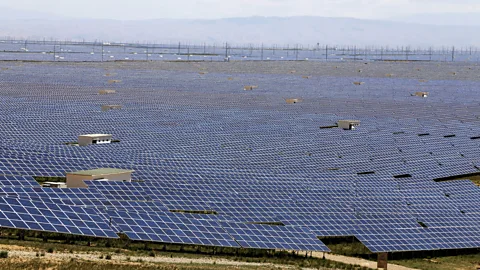
For nearly a decade, an unprecedented ecological experiment has been unfolding across the grasslands of China, where the rapid expansion of utility-scale solar energy has initiated a complex and profound transformation of the local environment, affecting not just the energy grid but the very life that thrives above and below the soil’s surface. The world’s largest solar energy market, China has dramatically expanded its photovoltaic (PV) capacity, covering over 3,700 square kilometers by the end of 2022, with a significant portion of this growth concentrated in the nation’s vast and ecologically sensitive grasslands and deserts.
This large-scale deployment has provided a crucial testing ground for scientists to study the long-term ecological impacts of renewable energy infrastructure. A pivotal 2026 study, published in the journal Plant and Soil, provides some of the most detailed insights yet, revealing that after nine years of operation in a temperate grassland, the presence of PV panels had fundamentally reshaped both the plant communities above ground and the intricate microbial networks below it, highlighting an ecological balancing act that is far from simple.
The ecological impact of the solar panels is driven by the physical changes they bring to the local microclimate, acting as massive engineered structures that intercept sunlight and redistribute water. The panels create a mosaic of distinct micro-habitats: areas directly underneath the panels are cast in permanent shade, experiencing cooler temperatures and reduced evaporation; the edges of the panels receive concentrated rainwater runoff, creating localized zones of higher moisture; and the spaces between the panel rows are subjected to a different pattern of light and shadow.
This alteration of near-surface energy transfer, where panels can reduce surface heat flux by up to 95%, dramatically changes the local climate, with studies showing that soil temperatures under panels can be significantly lower than in surrounding open areas. These changes in turn affect soil moisture, with some research indicating that soil under the panels in arid regions can hold up to three-quarters more water than nearby ground, a phenomenon often termed a “compensatory effect” or “PV-enabled grass production”.
This new, patchwork environment has, in turn, driven a significant shift in the plant communities above ground. The nine-year study found that plant diversity was not uniform across the solar park; notably, the areas between the panel rows boasted higher plant diversity than the shaded under-panel or the water-saturated lower-edge areas. The composition of species also changed, with the study revealing an increase in shade-tolerant species, such as Leymus secalinus, beneath the panels, and a rise in sun-loving heliophytic species like Stipa grandis in the better-lit spaces between them.
This indicates that rather than simply suppressing vegetation, the solar park reconstructs the competitive hierarchy of the grassland, favoring certain species over others. Furthermore, this alteration of plant life has been observed to have a positive impact on carbon sequestration, as studies from the Qinghai-Tibet Plateau have shown a significant increase in vegetation aboveground biomass carbon density, which continues to grow with the age of the solar park.
Perhaps the most remarkable and unseen changes occurred beneath the ground, within the complex soil microbial communities that are fundamental to nutrient cycling, soil fertility, and carbon storage. Using advanced high-throughput DNA sequencing, researchers discovered that after nine years, the microscopic life beneath the solar panels had also undergone a major transformation. The abundance of certain bacterial groups, like Actinobacteriota, decreased, while others, including Proteobacteria and Acidobacteria, increased in number. The presence of the solar panels also affected the microscopic fungi, with a notable reduction in arbuscular mycorrhizal fungi, which play a critical role in helping plants absorb nutrients. The changes were not uniform, with the under-panel areas showing an enrichment of microbes associated with nitrogen cycling, while the wetter lower-edge areas favored copiotrophic prokaryotes, which thrive in nutrient-rich conditions.
The new research also underscores a crucial, but not always straightforward, interconnection between the plant world above and the microbial world below. The study from Plant and Soil found a strong link between the shifts in dominant plant species and the composition of the soil microbial communities, suggesting that changes to the vegetation directly drive the changes in the soil microbiome. The relationship is complex, however, with some studies showing that the stability of above-ground plant communities and below-ground microbial communities can be “decoupled,” meaning they don’t always respond in the same way to the pressures created by the solar park. While the stability of above-ground plant communities might decline sharply in the first year of installation and remain subdued, the below-ground communities have been observed to show more resilience and even increase their stability over time.
These intricate dynamics highlight that the nine-year mark is just a snapshot in a long-term, ongoing negotiation between nature and technology. The research collectively demonstrates that large-scale solar installations are not passive additions to the landscape but are active ecological drivers, creating novel environments that continue to evolve. The findings challenge the simplistic view of renewable energy as an inherently beneficial solution, pointing instead to the need for careful, long-term monitoring and land-use strategies that balance the urgent demand for clean energy with the equally critical need to maintain ecosystem resilience and integrity.