June 13, 2026
The Middle East finds itself in a perplexing geopolitical position: despite Iran launching direct ballistic missile and drone strikes on military facilities within several Arab nations, none of these countries have launched a military retaliation. This seemingly paradoxical restraint is not born from weakness but rather from a sophisticated, if cynical, calculation involving immense financial payoffs, a desperate American push for a ceasefire, and the strategic reality that Iran has effectively won the war’s current phase. The attacks in question were part of a large-scale Iranian retaliatory operation targeting what Tehran described as 18 military facilities across the region, including bases associated with F-35, F-15, and F-16 aircraft.
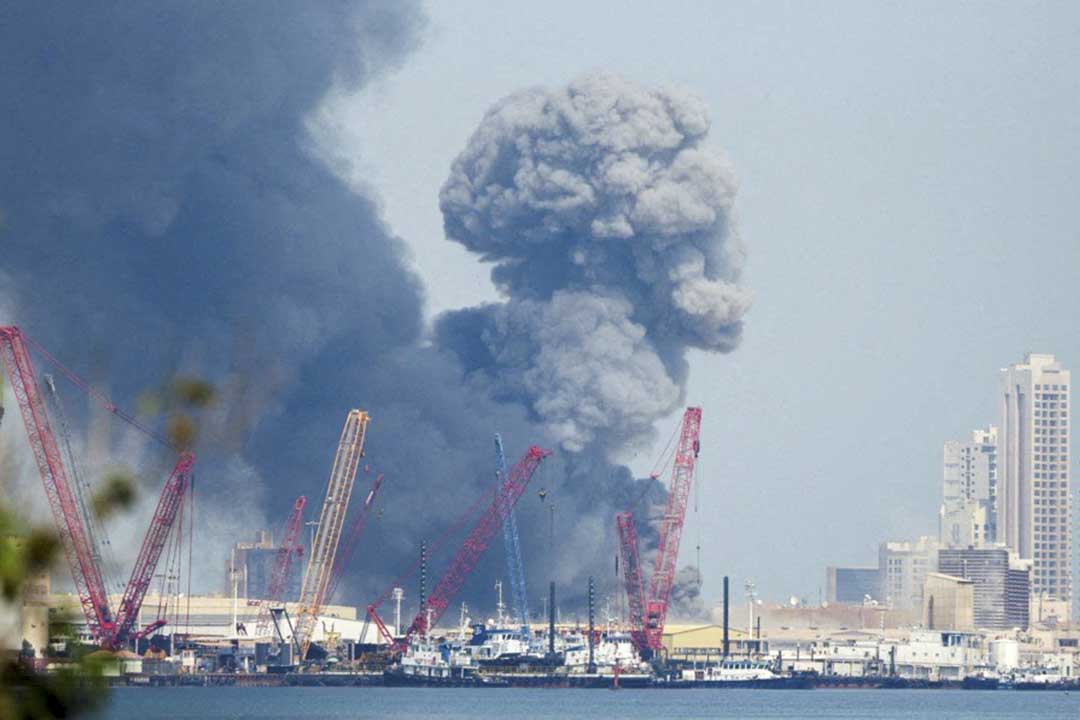
Specifically, Jordan’s Muwaffaq Al-Salti Air Base was reportedly struck by ballistic missiles, with Iranian media claiming significant damage to fighter jets, including F-16s. Concurrently, U.S. bases in Kuwait and Bahrain also came under fire in a tit-for-tat escalation following the downing of a U.S. Apache helicopter. On the surface, this constitutes an act of war against sovereign Arab nations, yet the response has been deafening silence, primarily because the Gulf states have already paid billions to ensure that silence.
The most significant reason for the lack of Arab retaliation lies in a stunning financial arrangement revealed on the very day of the attacks. The United Arab Emirates (UAE) has quietly agreed to unlock billions of dollars for Iran in a direct payment scheme designed to purchase immunity. According to sources familiar with the arrangement, the UAE agreed to release a total of $10 billion to Iran, of which more than $3 billion had already been delivered. Other sources estimate the total package could be as high as $20 billion, agreed upon explicitly in exchange for an end to Iranian missile and drone attacks on the UAE.
This deal, brokered through back-channel negotiations involving senior Iranian Revolutionary Guard officials who recently met with the UAE’s national security adviser in Abu Dhabi, fundamentally alters the cost-benefit analysis of war for the Gulf monarchies. By paying this “protection money,” the UAE ensures that Iranian strikes cease. Furthermore, the agreement reportedly goes beyond a simple halt to violence, paving the way for intelligence sharing and renewed economic cooperation. Therefore, for countries like the UAE and potentially others that Iran has approached for similar deals, retaliating against Iran would not only be suicidal in terms of infrastructure damage but would also void the expensive peace they just purchased.
Crucially, the lack of Arab retaliation is also a direct consequence of the intense diplomatic pressure from the United States, which is currently on the verge of signing a historic ceasefire agreement with Iran. As of June 13, U.S. and Iranian officials stated that a peace deal has “never been closer,” with President Donald Trump hinting at a signing ceremony as soon as this weekend. The war, which began on February 28, has resulted in a strategic stalemate that has humiliated Washington. Iran successfully seized control of the Strait of Hormuz, choked the global oil supply, and withstood over 40 days of U.S.-Israeli bombing without capitulating.
Consequently, the Trump administration is desperately seeking a way out. The proposed memorandum of understanding, reportedly being finalized in Geneva, explicitly includes the “end of the war on all fronts, including Lebanon,” and mutual commitments to respect sovereignty. For America’s Arab allies, who rely on the U.S. security umbrella, launching a separate war against Iran right now would directly sabotage Washington’s primary foreign policy objective. The White House has effectively ordered its allies to stand down to ensure the fragile peace talks succeed.
Furthermore, the Arab nations have no appetite to fight a war that the United States is losing. Analysis of the conflict reveals that Iran has emerged strategically stronger despite absorbing significant military and economic costs. Tehran has demonstrated that it can strike U.S. assets and their allies’ infrastructure at will, while the U.S. has failed to achieve regime change or force a unilateral surrender regarding Iran’s nuclear or missile programs. In fact, the negotiations reflect an Iranian victory: Israel’s demand to limit Iran’s ballistic missiles and end support for regional proxies has been dropped from the negotiating agenda.
Iran retains its nuclear infrastructure for future talks, and the language regarding the Strait of Hormuz suggests Iran will now manage the waterway with service fees, claiming sovereignty alongside Oman. In this context, for a country like Jordan, which was hit by missiles, or Kuwait, which saw its bases attacked, launching retaliatory strikes would mean fighting a battle-hardened Iran alone, without the full weight of a U.S. military machine that is already packing its bags for the exit. The editorial in The Hindu noted that Washington has realized that “coercive diplomacy does not work” and is now begging for a dignified compromise, leaving the Gulf states to fend for themselves diplomatically.
Finally, the attacks themselves have been strategically limited to military targets to provide political cover for the non-response. While Iran claims to have crippled air hubs, Western analysis suggests the strikes were calibrated to cause damage without triggering a blood debt that requires revenge. The attacks are part of an “escalation cycle” that has become normalized: the U.S. bombs Iranian proxies or tankers, and Iran retaliates by striking Gulf bases.
The Arab states have become unwilling hosts for U.S. military power, bearing the brunt of retaliation for a war between Israel, the U.S., and Iran. Their lack of retaliation is, therefore, an act of self-preservation and a signal to Tehran that they are distancing themselves from Washington’s conflict. In the span of 24 hours, reports emerged of explosions in southern Iran as the Revolutionary Guard fired warning shots, yet the region remains on the precipice of peace rather than wider war. For the Middle East, the equation is brutally simple: the UAE paid $10 billion to avoid being the next target, and every other Arab nation is following its lead, choosing financial solvency and immediate security over the uncertain honor of military revenge.