
June 11, 2026
The recent dramatic escalation of hostilities between Iran and the United States has plunged the Middle East into its most volatile crisis in decades, with immediate and severe consequences projected for the global economy, energy markets, and international security. What began as a series of tit-for-tat strikes on proxy forces in Syria and Iraq culminated earlier this week when the U.S. Navy’s Fifth Fleet intercepted and destroyed several Iranian fast-attack craft allegedly attempting to block the Strait of Hormuz, prompting Tehran to launch a barrage of ballistic missiles at American bases in Qatar and the UAE, wounding dozens of personnel.
In response, the Pentagon confirmed early on June 11 that U.S. F-35 and B-2 bombers struck key Iranian nuclear facilities at Natanz and Fordow, as well as two Islamic Revolutionary Guard Corps (IRGC) naval command centers near Bandar Abbas. Within hours, Iran declared a “defensive jihad” and threatened to shut down the Strait of Hormuz completely, through which nearly 20% of global petroleum passes daily. The near-term future, analysts warn, will be defined by catastrophic energy supply disruptions, a spike in oil prices beyond $200 per barrel, and the risk of a wider war drawing in Gulf monarchies, Israel, and potentially non-state actors across Lebanon, Syria, and Iraq.
The most immediate effect, already unfolding today, is a severe oil price shock that is freezing global financial markets. By midday trading in London and New York, Brent crude futures surged 145% to $210 a barrel, the highest nominal price in history, while gasoline prices in the United States topped an average of $7.50 per gallon, triggering panic buying and long queues at pumps. The New York Stock Exchange halted trading briefly after the S&P 500 plunged 9%, while European and Asian indices suffered similar drops. Inflation, already stubborn in 2026 due to lingering post-pandemic supply chain issues, is now expected to accelerate to double digits in major economies, forcing central banks to choose between hiking interest rates to dangerous levels or accepting runaway price increases.
The International Energy Agency (IEA) issued an emergency statement warning that if the Strait of Hormuz remains blocked for more than a week, global strategic petroleum reserves would be exhausted within 45 days, leading to rationing in Europe and Asia and the collapse of dozens of smaller economies dependent on energy imports. Countries like Japan, South Korea, and India—which rely on the Persian Gulf for over 70% of their crude—have already begun diplomatic scrambles, but with U.S. and Iranian warships on high alert, any maritime convoy would require naval protection that could itself become a flashpoint.
On the regional security front, the escalation has shattered any remaining hopes for a diplomatic off-ramp. Iran’s proxies in Iraq, Syria, Lebanon, and Yemen have been put on full alert, and multiple rocket attacks were reported against U.S. facilities in Erbil and the Green Zone in Baghdad just hours after the U.S. strikes. The Israeli Defense Forces (IDF) mobilized reserve units along their northern border with Lebanon, fearing Hezbollah could open a second front with a massive missile barrage. Meanwhile, Saudi Arabia and the UAE, despite their historical rivalry with Iran, have publicly called for “maximum restraint” because any retaliatory strike on their oil infrastructure—such as the 2019 Abqaiq attack—would now be exponentially more devastating.
Intelligence sources indicate Iran has dispersed its remaining ballistic missiles to hidden mobile launchers and is preparing a saturation attack on U.S. air defense systems in Bahrain and Kuwait, potentially using new hypersonic-capable missiles that could overwhelm even Patriot and THAAD batteries. The Pentagon has ordered the deployment of two additional carrier strike groups to the Arabian Sea, bringing total U.S. naval power in the region to its highest level since 2003, while also warning that commercial flights over the Gulf have been suspended indefinitely due to the risk of anti-aircraft missiles.
The economic ripple effects beyond energy are equally grim. Global supply chains for manufactured goods, already fragile, are facing collapse because container ships that normally transit the Persian Gulf and the Red Sea via the Suez Canal are being rerouted around the Cape of Good Hope, adding 14 days and massive fuel costs to every voyage. Food prices are expected to soar, as many developing nations in East Africa and South Asia depend on grain imports that pass near the war zone.
The World Food Programme warned that a prolonged conflict could push over 50 million additional people into acute hunger within six months. Furthermore, the conflict has accelerated a flight to safety in currencies and assets: the Swiss franc and Japanese yen spiked, while Bitcoin saw a paradoxical short-term surge as some investors sought alternatives to state-backed money. Yet central bankers fear that de-dollarization efforts by China and Russia, which have been quietly expanding their bilateral trade in yuan and rubles, will now gain unstoppable momentum as oil buyers look for any avenue to avoid U.S. financial sanctions.
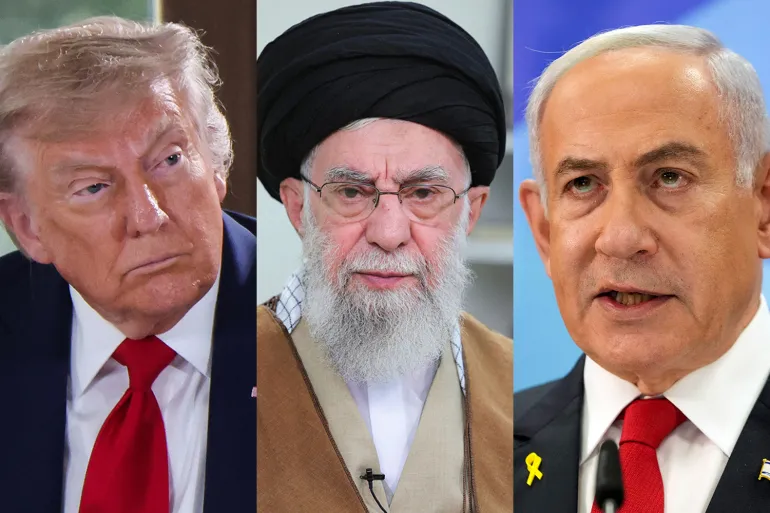
Looking ahead to the remainder of 2026, most geopolitical risk models agree that the window for de-escalation is closing rapidly. The Biden administration (or its successor, depending on the November 2025 election results) has demanded that Iran cease all threats to shipping and dismantle its nuclear program beyond 20% enrichment—conditions Tehran has so far rejected. Iran’s supreme leader, in a televised speech on June 11, vowed “an open sea war” unless the U.S. withdraws all forces from the Gulf Cooperation Council states.
Diplomatic efforts through the United Nations and Oman remain underway, but without a ceasefire, analysts predict a prolonged asymmetric conflict: U.S. airstrikes on military targets and Iranian sanctions evasion via shadow tankers, punctuated by Houthi drone attacks on Saudi oil fields and possible cyber strikes on U.S. power grids. The most dangerous variable remains Israel, which has long warned it will not accept a nuclear-armed Iran; any sign that Iran is racing toward a bomb could provoke a preemptive Israeli strike, potentially drawing the U.S. into a full-scale invasion scenario. For the average global citizen on June 11, 2026, the near future appears grim: $10-per-gallon gasoline, rotating blackouts, stock market volatility, and a stark rise in geopolitical uncertainty—a new era where the era of cheap, stable energy is a fading memory and every commute, grocery purchase, and utility bill reflects the price of war.