April 25, 2026
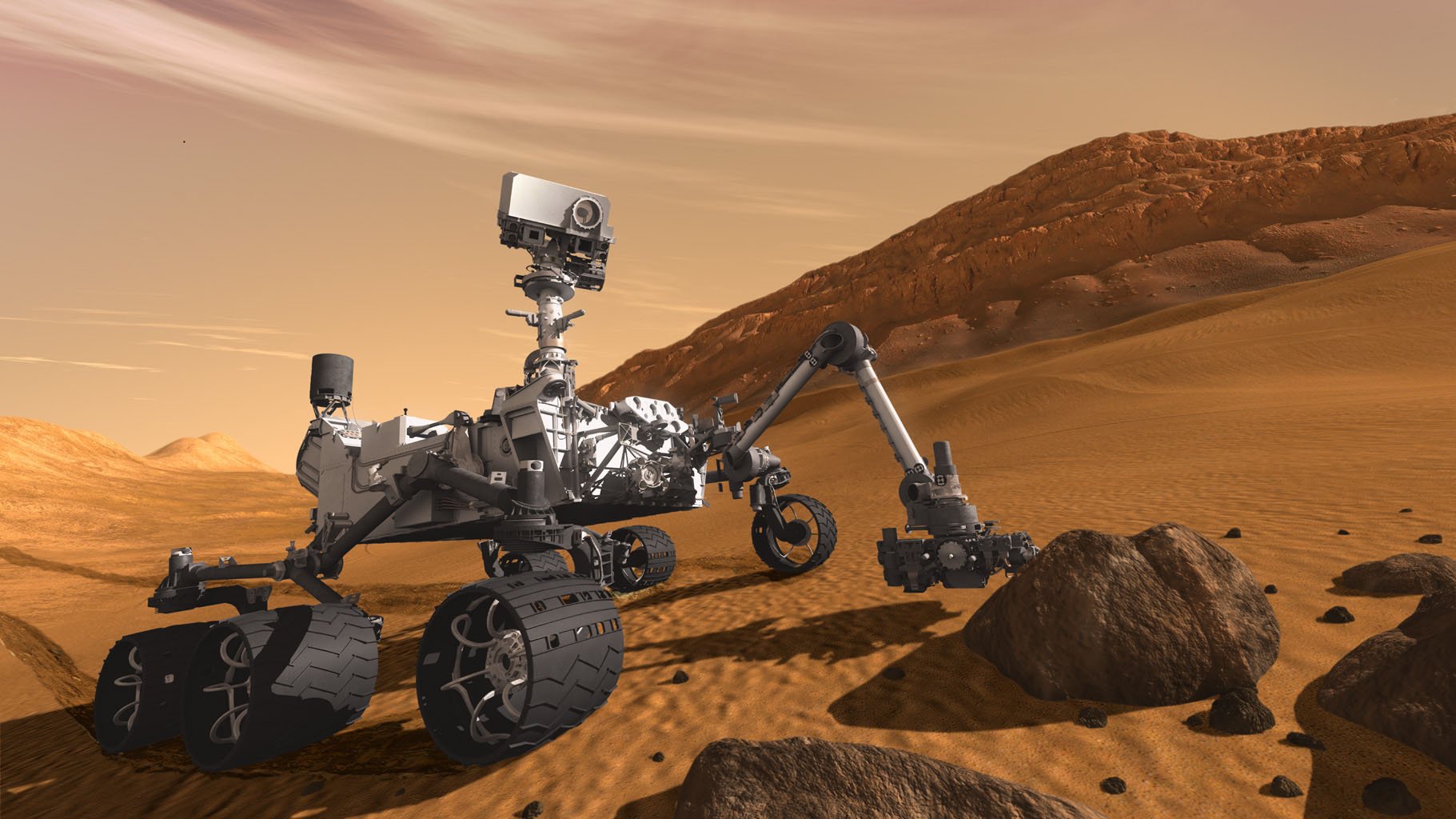
After months of painstaking exploration across one of the most treacherous and scientifically significant landscapes on the Red Planet, NASA’s Curiosity rover is bidding farewell to the “spiderwebs” of Mars. For nearly half a year, the SUV-sized robotic geologist has been navigating the boxwork region on the slopes of Mount Sharp (Aeolis Mons), a 5-kilometer-tall mountain inside Gale Crater . These geological formations, which resemble giant spiderwebs spreading up to 20 kilometers across when viewed from orbit, have finally revealed their secrets up close. The consensus among scientists is clear: these ridges are the fossilized remnants of a “plumbing system” of ancient groundwater that persisted much longer than previously thought, rewriting the timeline of when Mars might have been habitable . As Curiosity prepares to leave the area—having completed its crossing in late March—the data transmitted back to Earth has provided a wealth of evidence suggesting that the water necessary for microbial life did not vanish as quickly as orbital imagery implied.
The journey through this rugged terrain was perilous for the engineering team at NASA’s Jet Propulsion Laboratory. The rover had to drive along the tops of ridges standing 3 to 6 feet (1 to 2 meters) tall, navigating paths that were barely wider than the rover’s own wheels. Describing the process, operations systems engineer Ashley Stroupe noted, “It almost feels like a highway we can drive on. But then we have to go down into the hollows, where you need to be mindful of Curiosity’s wheels slipping or having trouble turning in the sand. There’s always a solution. It just takes trying different paths” . This difficulty was worth the risk because the “boxwork” structures—formed when groundwater seeped through bedrock fractures, deposited minerals that hardened the rock, and then eroded the softer material away—offer a unique window into Mars’ climatic history . Unlike Earth, where boxwork ridges are usually only a few centimeters tall and found in caves, the Martian versions are monumental, suggesting a massive and sustained presence of mineral-rich water.
The most significant discovery, however, lies not just in the structure but in the chemistry. The fact that Curiosity found these spiderweb formations high on Mount Sharp is critical. The mountain’s layers represent different eras of the planet’s history, with higher elevations generally indicating more recent, drier periods. Finding evidence of significant groundwater this high up suggests that the water table remained elevated even as surface water was evaporating into space. Tina Seeger of Rice University, a mission scientist leading the investigation, explained the implications of this elevation: “Seeing boxwork this far up the mountain suggests the groundwater table had to be pretty high. And that means the water needed for sustaining life could have lasted much longer than we thought looking from orbit” . To confirm this, Curiosity acted as a mobile chemistry lab, drilling into the rocks and analyzing the powder with X-rays and high-temperature ovens. The analyses detected clay minerals within the ridges and carbonate minerals in the hollows—both definitive fingerprints of water interaction .
One of the more puzzling findings involved small, bumpy textures known as nodules, which are also indicators of past water. Scientists expected to find these nodules near the central fractures where water flowed most vigorously, but they were discovered primarily along the ridge walls and in the sandy depressions between them. Seeger remarked on this anomaly: “We can’t quite explain yet why the nodules appear where they do. Maybe the ridges were cemented by minerals first, and later episodes of groundwater left nodules around them” . This suggests that the region experienced multiple, separate episodes of wetting, rather than a single, gradual drying event. In a rare and high-priority move, the rover recently collected a fourth sample for “wet chemistry” analysis—a specific technique involving chemical reagents designed to detect organic compounds (carbon-based molecules) that are the building blocks of life, though results from that specific test are still being correlated with the geological data .
As of late March, Curiosity officially crossed the southern contact of the boxwork terrain, moving into the surrounding layered sulfate unit . The rover has now set its sights on the broader sulfate-rich region ahead, but the legacy of the spiderwebs endures. These formations are definitive proof that while the surface of Mars was becoming a freezing desert, vast reservoirs of subsurface water persisted for millions of years longer than terrestrial climate models initially suggested. By proving that the groundwater table remained high even as the planet dried, the mission has provided astrobiologists with a compelling target: if life ever emerged on Mars, these underground, water-lined fractures would have been the last, best place to survive .