June 11, 2026
The European Space Agency (ESA) formally awarded a major contract to industry prime contractor Thales Alenia Space for the development of the next-generation Radar Observing System for Europe in L-band (ROSE-L) . This high-stakes agreement, signed at ESA’s headquarters in Paris, officially propels the Copernicus Expansion mission into its final manufacturing and pre-launch verification phase. The contract, valued at several hundred million euros, covers the completion of the satellite bus, the integration of the sophisticated payload, and the crucial launch support services, with the first satellite—designated ROSE-L A—now officially scheduled for liftoff in 2029 from Europe’s Spaceport in French Guiana aboard a Vega-C or Ariane 6 rocket .
ESA Director General Josef Aschbacher hailed the signing as “a pivotal moment for European autonomy and environmental security,” emphasizing that ROSE-L will fill critical observational gaps left by current systems, specifically the aging Sentinel-1 fleet, by introducing long-wavelength L-band radar technology capable of seeing through vegetation, dry snow, and light precipitation to deliver high-resolution images regardless of weather or daylight conditions .
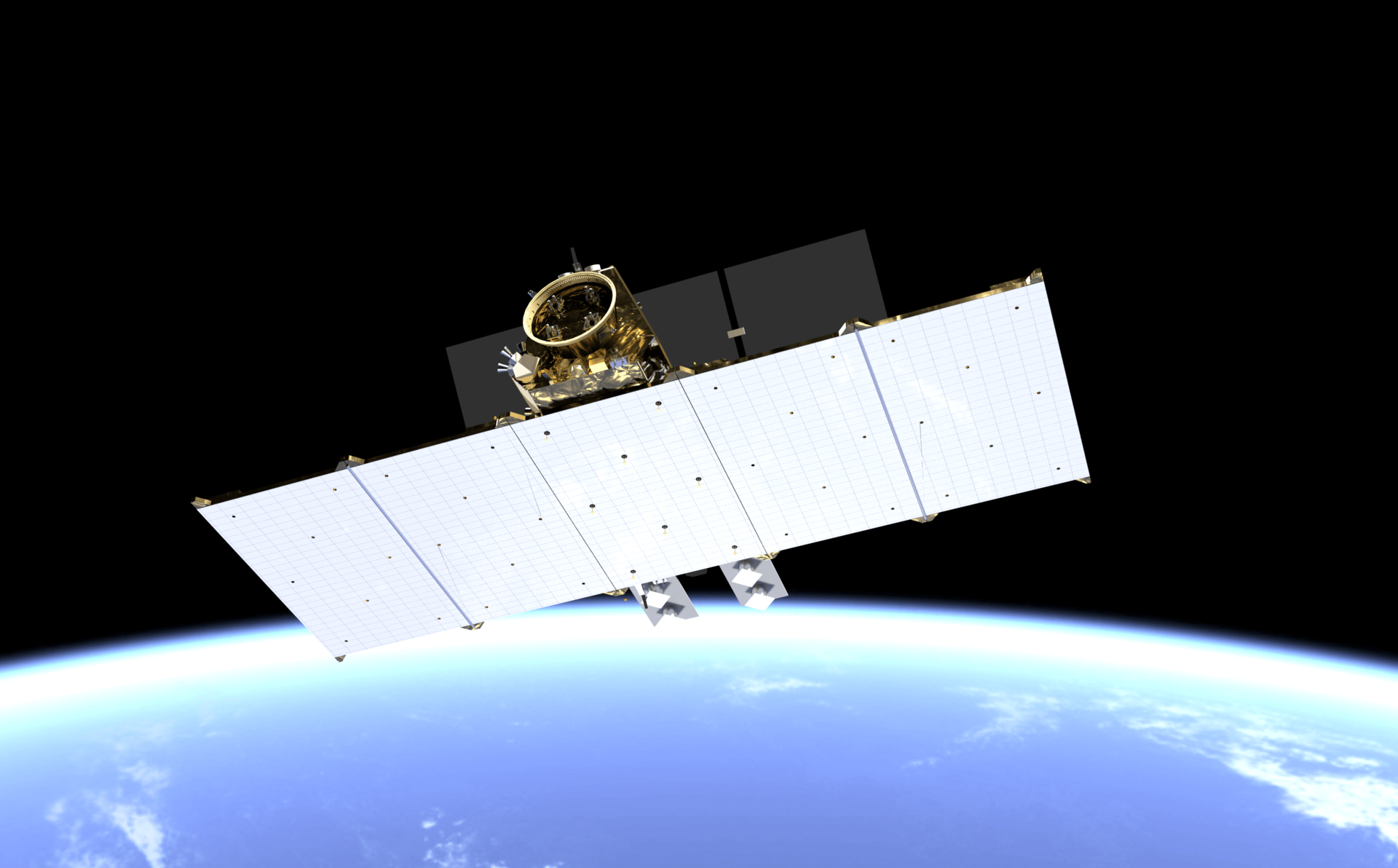
The technical scope of the June 11 contract is breathtaking in its engineering ambition, focusing on the deployment of what will be one of the largest synthetic aperture radar (SAR) antennas ever flown in space. At the heart of the ROSE-L satellite lies a deployable antenna spanning 40 square meters—roughly the size of a small studio apartment or four table-tennis tables—designed to provide unprecedented ground resolution and swath width for monitoring land, oceans, and ice . Because this enormous structure cannot fit inside any existing rocket fairing, the prime contractor, Thales Alenia Space Italy, alongside subcontractor Airbus Defence and Space in Germany, has engineered a complex origami-like solution consisting of five separate carbon-fibre panels.
The contract specifically mandates the completion of the hold-down and release mechanisms and the spring-driven, fully passive deployment systems that will unfold the stowed wings in orbit just minutes after launch. “Deploying this structure is a single, irreversible operation that must work flawlessly the first time,” explained Gianluigi Di Cosimo, ESA’s Project Manager for ROSE-L, during the signing ceremony. “We have already validated the design on the ground with an 8.2-metre-high, 7-tonne zero-gravity simulation rig, and now this contract ensures we can build the flight model.” Remarkably, the entire unfolding sequence is passive—powered solely by mechanical springs rather than motors or control electronics—saving weight and reducing the risk of failure as the 240-kilogram antenna wings lock into their final planar configuration .
Beyond the hardware, the June 11 contract solidifies ROSE-L’s operational role as a critical partner to the existing Sentinel-1 mission. Unlike Sentinel-1, which operates at C-band, ROSE-L’s L-band frequency (around 1.25 GHz) can penetrate deeper into natural materials, allowing it to map soil moisture beneath dense vegetation canopies and detect ground deformations in heavily forested areas where current instruments are blind . This capability is vital for food security monitoring across Europe’s agricultural zones and for geohazard risk management, such as landslides and subsidence.
The contract also secures the development of a dual-satellite constellation; while the first satellite launches in 2029, the agreement includes options for a second unit to ensure a global revisit time of just six days, with coverage increasing to three days over Europe and daily over the rapidly changing Arctic region . Authorities highlight that this system-of-systems approach will allow ROSE-L to coordinate data acquisition with Sentinel-1, delivering enhanced interferometric products for scientists studying ice sheet dynamics and earthquake zones.
The timing of the contract award—June 11, 2026—coincides with a flurry of preparatory activities that underscore the mission’s readiness. Just two months prior, in April 2026, engineers successfully completed a crucial ground test where a structural model of the SAR antenna wing was fully deployed at Airbus facilities in Friedrichshafen, Germany, validating the mechanical interface and deployment sequence . Furthermore, ESA has simultaneously activated Mission Advisory Groups (MAGs) for ROSE-L’s Phase D/E1 development, recruiting leading scientists from institutions such as CNR-ISMAR in Italy, DLR in Germany, and MET Norway to refine the Geophysical Model Functions (GMFs) for ocean surface wind retrieval and sea state monitoring .
The contract also integrates contributions from Belgium’s Spacebel, which is developing the control application software for the SAR instrument to ensure data acquisition and instrument operations meet the rigorous standards required for operational Copernicus services like maritime surveillance, oil spill detection, and Arctic sea ice mapping . As Europe braces for the loss of Sentinel-1B and the aging of its predecessors, the ROSE-L contract award on June 11, 2026, represents not just a technological triumph, but a strategic investment in climate resilience, emergency response, and the continent’s ability to monitor its changing planet independently for the next decade .