
July 24, 2026
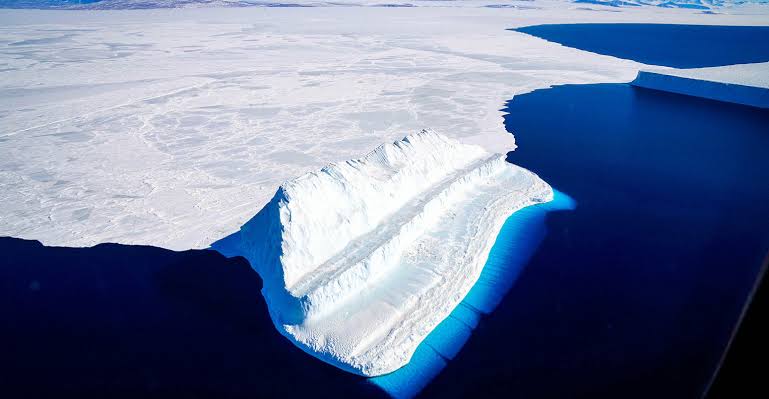
Today, a proposal that sounds like it belongs in a work of science fiction is undergoing serious scientific scrutiny: the construction of an 80-kilometer-long underwater curtain to protect the vulnerable Thwaites Glacier in West Antarctica . Often called the “doomsday glacier,” Thwaites is a giant ice mass, roughly the size of Florida, that is melting at an alarming rate due to the influx of warm ocean water beneath it, a process that threatens to significantly raise global sea levels . The ambitious idea, known as the Seabed Curtain Project, is being explored by a coalition of engineers, climate scientists, and policy experts from leading institutions such as Cambridge University, the University of Chicago, and the Alfred Wegener Institute .
Their goal is not to build a solid wall, but a flexible curtain anchored to the seafloor that would act as a deflector, redirecting the warm currents that are eating away at the glacier’s base and thereby slowing its rate of collapse . The urgency of this project is underscored by the glacier’s contribution to global sea-level rise; it is already responsible for approximately 4% of the annual increase, and its complete collapse could ultimately raise sea levels by as much as 65 centimeters, if not more, putting millions of people living in coastal areas at risk .
The proposed structure itself is a marvel of engineering that presents colossal challenges. The curtain would be 80 kilometers long and up to 150 meters high, which is roughly equivalent to a 50-story building, installed at a depth of approximately 650 meters . Its design is intended to be porous, allowing cold water and marine life to pass through while targeting only the warmer, deeper currents that undercut the ice . However, building and anchoring such a massive structure on the Antarctic seabed—an irregular, sedimentary surface subject to iceberg scouring—presents a Herculean task . Beyond the sheer logistics, the project’s estimated cost is staggering, ranging between US $40 billion and $80 billion depending on the final design . Proponents of the idea justify this enormous expense by arguing it is a fraction of the economic damage that would be caused by unchecked sea-level rise, which could require trillions in adaptation costs for coastal cities worldwide .
To determine if this audacious plan is even viable, scientists are not just working on computer models. In the first months of 2026, between January and March, an expedition from the South Korean polar institute KOPRI conducted crucial fieldwork in the Amundsen Sea . Researchers aboard the icebreaker RV Araon installed autonomous ocean moorings in the channel connecting Pine Island and Thwaites glaciers to measure temperature, salinity, currents, and turbulence . This data is essential for understanding the behavior of the warm water mass and will pinpoint where and if a barrier would make a difference .
Furthermore, the team mapped a submarine elevation to see if it could serve as a stable foundation for the 80-kilometer structure, as the curtain would need a bed capable of sustaining permanent anchorage . In a parallel and ingenious line of research, scientists are also studying natural analogues in the Arctic. They are comparing two fjords in Svalbard, Norway: the Van Mijenfjord, which has a natural underwater threshold that blocks warm water, and a neighboring fjord without such a barrier . This comparison essentially provides a real-world experiment, allowing researchers to observe the long-term ecological and physical effects of such a barrier without building one. The report from this comparative study is scheduled for September 2026 and is expected to provide the first realistic measure of the concept’s potential effectiveness .
Despite the progress in research, the scientific community remains deeply divided on the project. Critics argue that such geoengineering is a dangerous distraction from the primary goal of reducing carbon emissions . They fear it presents a false hope, diverting attention and resources from tackling the root cause of climate change . There are also significant concerns about unintended consequences, such as altering local currents, impacting sedimentation, and harming fragile marine ecosystems in one of the most pristine environments on Earth . Proponents, like the project’s leader John Moore, counter that decarbonization alone is not happening quickly enough to save Thwaites .
They argue that the glacier may have already passed a tipping point, and even if emissions were cut tomorrow, the warm water already in the system would continue to melt it from below . To them, the curtain is not a solution to climate change, but a critical “Band-Aid” to buy precious time for coastal adaptation and emissions reductions . For now, the project is in a rigorous three-year research phase focusing on material selection, mooring design, and prototype testing, with small-scale tests already being planned for Norwegian fjords and even the River Cam in Cambridge . Whether this 80-kilometer curtain will ever become a reality on the Antarctic seafloor remains to be seen, but the very fact that such an extreme idea is being seriously investigated illustrates the profound anxiety and urgency surrounding the fate of the world’s most dangerous glacier .