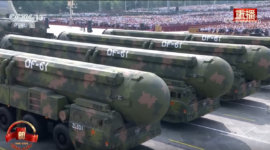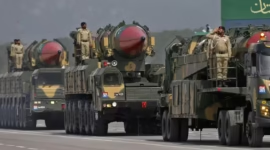

The $175 billion “Golden Dome” missile defense initiative represents one of the most ambitious engineering undertakings in modern military history, designed to safeguard North America from an increasingly volatile matrix of airborne threats. However, despite its staggering financial investment and advanced multi-layered architecture, military analysts, physicists, and defense experts universally agree that an impenetrable, 100% effective shield is technologically impossible. The core limitation stems from the harsh realities of physics, orbital mechanics, and the asymmetric economics of modern warfare, which consistently favor the attacker over the defender.
To understand why a multi-billion-dollar shield cannot stop everything, one must first look at the severe constraints of orbital mechanics and coverage geometry. Proposed architectures that rely on space-based interceptors dictate that assets must fly in rapid orbits just outside the atmosphere. At any given moment, only a tiny fraction of these space interceptors will actually be in the correct position relative to a newly launched adversary missile to intercept it. Because ballistic and hypersonic trajectories move at tremendous velocities, a split-second delay or an unfavorable orbital window means interceptors simply cannot reach the threat area in time, leaving geographic gaps that intelligent adversaries can actively exploit.
Compounding these spatial limitations is the problem of advanced countermeasures and decoy saturation. Modern ballistic missile technology has evolved far beyond simple, predictable re-entry vehicles. Adversaries now routinely equip their arsenals with sophisticated decoys, chaff, radar-absorbent materials, and inflatable balloon targets that mimic the thermal and radar signatures of actual warheads. During the mid-course phase of flight—where space-based and ground-based interceptors are meant to engage—it becomes extraordinarily difficult for tracking sensors to distinguish a real nuclear warhead from a lightweight decoy in the vacuum of space. To compensate for this ambiguity, the defense system must fire multiple expensive interceptors at every single suspected track, rapidly exhausting limited interceptor inventories and driving the cost-exchange ratio heavily in favor of the attacker.
Furthermore, the emergence of hypersonic glide vehicles (HGVs) and maneuverable cruise missiles fundamentally breaks traditional interception paradigms. Unlike classical intercontinental ballistic missiles (ICBMs), which follow predictable parabolic arcs governed by gravity, HGVs travel at speeds exceeding Mach 5 within the upper atmosphere and possess aerodynamic maneuverability. This allows them to dynamically alter their flight paths mid-course, evading the fixed calculation vectors used by legacy radar grids and kinetic kill vehicles. By the time ground or space sensors detect a maneuverable threat vector, the reaction window narrows from minutes to mere seconds, rendering intercept calculations exceptionally prone to error.
The asymmetric economics of offense versus defense further guarantee that a shield cannot be all-encompassing. Building, testing, launching, and maintaining thousands of interceptors, high-frequency radars, and tracking satellites demands a continuous capital drain that even a superpower budget cannot scale infinitely. Conversely, an adversary can develop, mass-produce, and stockpile inexpensive asymmetrical saturation tools—such as low-cost cruise missiles, drone swarms, or extra warheads—for a fraction of the financial investment required to field a countermeasure. If an adversary fires a coordinated salvo of dozens of missiles alongside hundreds of decoys, the defense network faces an immediate mathematical saturation problem, where the sheer volume of incoming objects overwhelms the processing capacity of command-and-control nodes and depletes the inventory of intercept tubes.
Finally, the sheer complexity of integrating a continent-wide network introduces systemic vulnerabilities, software latency, and catastrophic single points of failure. Connecting disparate legacy sensors, space-based infrared systems, and ground batteries into a unified Joint All-Domain command architecture requires millions of lines of code and uninterrupted data transmission under intense electronic warfare conditions. Adversaries are heavily investing in cyberattacks, anti-satellite (ASAT) weapons, and electronic jamming designed to “blind” the shield’s critical sensory infrastructure at the onset of a conflict. If the command network is disrupted, or if early-warning satellites are successfully jammed or destroyed, the entire multi-billion-dollar apparatus loses its situational awareness. Ultimately, while the Golden Dome significantly raises the threshold for an attack and limits potential damage, the laws of physics and the harsh realities of strategic math ensure that some threats will always slip through.