The Indian commercial space ecosystem has reached another vital technological milestone with Pune-based space-tech startup Astrophel Aerospace successfully validating its indigenously developed high-performance linear actuator. This crucial advancement marks a significant step forward in building indigenous subsystems for next-generation reusable launch vehicles (RLVs), showcasing how private sector innovation is driving India’s growing autonomy in complex space robotics and propulsion control. Actuators serve as the core muscle of a rocket, responsible for thrust vector control (TVC), valve regulation, and aerodynamic control surface manipulation during extreme flight regimes. By validating a fully native, flight-grade actuator capable of high-force dynamic responses, Astrophel Aerospace reinforces India’s capability to design, fabricate, and test critical space hardware entirely within its domestic supply chains.
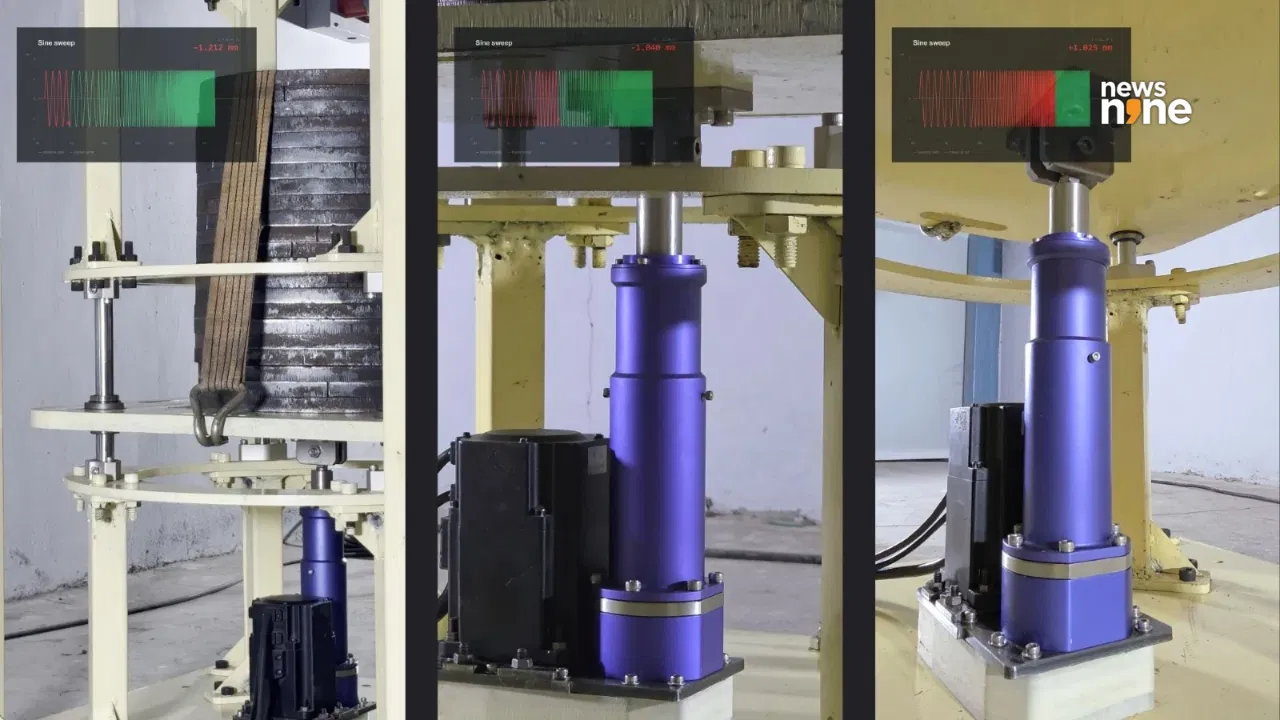
The newly tested actuator system underwent rigorous full-load dynamic and bandwidth testing at a test facility near Mantarwadi in Pune following nearly two years of dedicated research and engineering iterations. Designed to manage severe mechanical stresses, the electro-mechanical actuator demonstrated successful performance handling full loads up to 5 kN (kilonewtons) while maintaining ultra-precise positioning accuracy. Electro-mechanical actuators are increasingly replacing conventional hydraulic systems in modern reusable rockets due to their lower structural mass, reduced operational complexity, ease of refurbishment, and higher power efficiency. The actuator integrates both the mechanical driver and customized embedded control electronics into a single modular unit, delivering near-zero mechanical backlash, response latency of 1 to 2 milliseconds, and micrometric positioning accuracy down to ±1–5 µm.
In reusable space architecture, precision movement control is essential for dynamic maneuvers such as boostback burns, grid-fin atmospheric steering, and powered vertical landing. When a rocket re-enters the atmosphere or descends for a vertical landing, its guidance system relies on rapid steering adjustments transmitted directly through high-bandwidth actuators. The successfully tested unit provides high torque density and rapid dynamic responsiveness, allowing for real-time gimbaling of engine nozzles and high-frequency throttling control under severe vibrations, thermal spikes, and dynamic aerodynamic loads. Achieving such performance on an indigenous test bench highlights Astrophel Aerospace’s maturing expertise in mechanical, electrical, and control engineering systems suited for space missions.
This successful test aligns directly with Astrophel Aerospace’s broader corporate roadmap toward a commercially viable vertical take-off and vertical landing (VTVL) reusable rocket prototype. Founded as a bootstrapped startup, the Pune venture has consistently focused on heavy vertical integration and in-house component manufacturing to drastically drop launch hardware expenses. Alongside these high-performance actuators, Astrophel’s technology stack encompasses indigenous cryogenic turbopumps, dynamic cryogenic valves, flight computers, vacuum-insulated propellant tanks, and advanced Guidance, Navigation, and Control (GNC) algorithms. By developing critical hardware internally rather than relying on expensive overseas imports, the firm aims to deliver launch and actuation hardware that is roughly 30% more cost-effective than existing international solutions.
Beyond powering its own upcoming suborbital test vehicles and Astra series launch platforms, Astrophel Aerospace plans to market these qualified electro-mechanical actuators directly to external commercial aerospace and defense clients. The robust design makes the actuator versatile for unmanned aerial vehicles (UAVs), tactical defense systems, dynamic ground test stands, industrial high-speed motion control, and VTOL flight control surfaces. Drawing advisory support from veteran experts formerly associated with the Indian Space Research Organisation (ISRO), Hindustan Aeronautics Limited (HAL), and the National Aerospace Laboratories (NAL), Astrophel Aerospace embodies the rapid growth of the Make in India defense and deep-tech ecosystem. The successful qualification of this high-capacity actuator proves that Indian private firms can master complex, high-reliability mechanical subsystems necessary for the future of sustainable, low-cost space exploration.