June 13, 2026
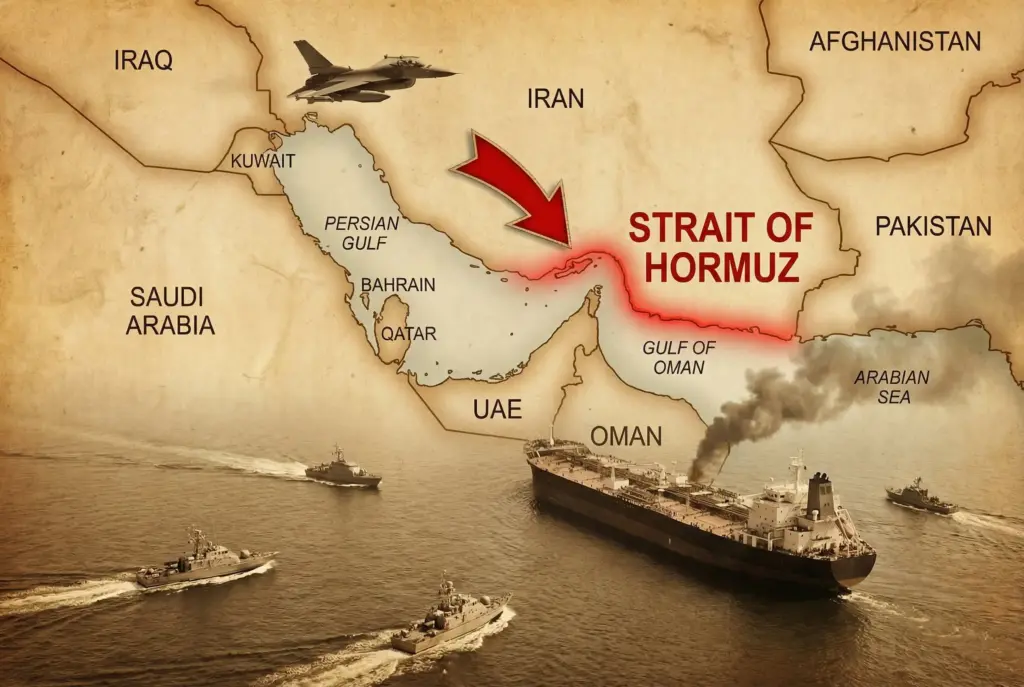
As the Gulf War of 2026 continues to disrupt global energy markets, China has activated a multi-layered strategy to manage the supply shock from the near-total closure of the Strait of Hormuz, leveraging a combination of emergency reserves, import diversification, and a long-term shift toward renewable energy. The conflict, which began in late February following the US-Israel offensive against Iran, has triggered what the International Energy Agency calls the biggest oil market shock on record. With approximately 5.4 million barrels per day of crude oil—representing nearly half of China’s total imports—typically transiting the strait , Beijing has moved swiftly to insulate its economy from the crisis.
The most immediate action involves tapping commercial crude stockpiles; China began drawing down these reserves in May, with draws expected to average about 1 million barrels per day in the coming months . According to estimates from Vortexa, Kpler, and Energy Aspects, this covers about one-third of the crude no longer received since the conflict started. However, this draw pales in comparison to the roughly 1.2 billion barrels held in combined commercial and strategic reserves, which analysts estimate could sustain consumption for 110 to 180 days under extreme scenarios .
Beyond reserve releases, China has imposed strict demand-side controls. State-owned refiners have cut processing rates to record lows, and Beijing has suspended exports of diesel and gasoline as a precautionary energy security measure to preserve domestic supply during the outages . These actions have helped mute price reactions—global benchmark Brent crude is up less than a third since the conflict began, a relatively modest increase given the severity of the disruption .
Crucially, China’s energy structure has reduced its vulnerability to oil price spikes; oil accounts for only about 18% of the country’s primary energy consumption, and the electricity system relies primarily on coal, hydro, solar, and wind—all unaffected by Gulf disruptions . Analysts from Goldman Sachs estimate that only about 6% of China’s total energy consumption is directly exposed to risks at the Strait of Hormuz, compared to over 70% for Japan and Korea .
The war has accelerated China’s already rapid energy transition. The accelerating adoption of electric vehicles (EVs) has contributed to a drop of approximately 1 million barrels per day in fuel demand this quarter, with NEV sales accounting for nearly half of all new vehicle registrations in 2025 . Furthermore, China has doubled down on wind power, installing three times as much capacity last year as the rest of the world combined; all six of the world’s largest wind turbine manufacturers are now Chinese . Non-fossil energy consumption surpassed petroleum for the first time in 2025, and renewable energy now accounts for about 60% of total installed power capacity .
This structural shift has created what analysts call an internal “structural hedge” against external energy price volatility . Import diversification provides another critical buffer. While China remains dependent on Gulf supplies, it has cultivated multiple alternative sources. Russian pipeline gas and crude, Central Asian overland routes, and supplies from Latin America and Africa have reduced reliance on any single maritime chokepoint . Crucially, about half of China’s natural gas imports arrive via overland pipelines that bypass the Strait of Hormuz entirely, and only about 6% of LNG imports transit the strait . The China-Europe Railway Express has seen freight volumes surge 25-32% year-on-year, providing a land-based alternative to disrupted sea lanes .
Analysts note that China’s response is not merely reactive but reflects decades of strategic planning. “China’s transport system has become structurally more flexible than in previous oil shocks,” said Emma Li, lead China market analyst at Vortexa . The country’s coal-to-chemicals industry—capable of producing fertilizers and industrial chemicals from domestic coal rather than imported oil—has helped stabilize domestic prices for critical goods like urea even as international prices surged over 40% . US Energy Secretary Chris Wright acknowledged the temporary nature of some measures: “They were building a strategic petroleum reserve, now they’ve stopped building… That’s in response to a crisis, that’s not a permanent change” .
However, analysts emphasize that many of China’s advantages—its EV fleet, renewable infrastructure, and import diversification—are permanent structural features that will continue to insulate it from future energy shocks. As Michal Meidan of the Oxford Institute for Energy Studies observed, “China’s energy system has powerful buffers” that few other nations can match . The real test, should the conflict prolong, will be whether these buffers can sustain China through extended disruptions—but for now, Beijing’s multi-pronged strategy has successfully weathered the worst energy crisis in modern history.