July 12, 2026
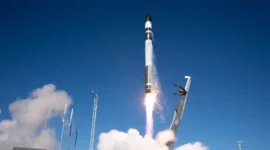
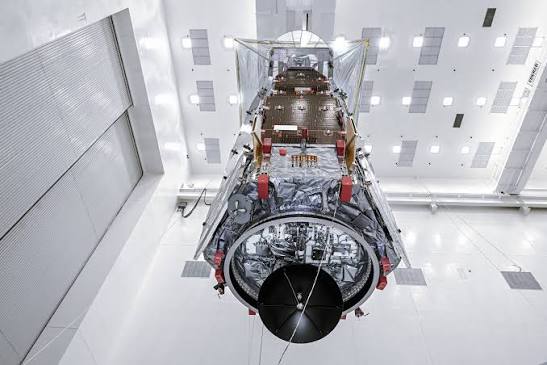
NASA successfully launched its latest technology demonstration satellite, the R5-S9 CubeSat, aboard a SpaceX Falcon 9 rocket as part of the Transporter-17 rideshare mission, marking a significant step forward in the agency’s pursuit of faster and more affordable space exploration . The liftoff occurred from Space Launch Complex 4 East at Vandenberg Space Force Base in California, sending the small but sophisticated spacecraft into low-Earth orbit to test a suite of next-generation technologies that could reshape the future of satellite design and operations .
Developed by NASA’s Johnson Space Center in Houston, the R5-S9 is the latest iteration in the Realizing Rapid, Reduced-cost high-Risk Research project series, a program designed to challenge traditional spacecraft development paradigms by focusing on speed, cost-efficiency, and the extensive use of commercial off-the-shelf (COTS) components . The mission’s primary objective is to validate new technologies directly in the harsh environment of space, thereby minimizing the time and expense typically required to bring innovative systems from the laboratory to operational readiness . This approach is a cornerstone of the R5 project, which operates on an incremental development model where each spacecraft builds upon the successes and lessons of its predecessors, allowing for continuous improvement in performance and reliability .
One of the most critical aspects of the R5-S9 mission is its role as a testbed for autonomous systems and advanced communication technologies. In partnership with Sandia National Laboratories, the CubeSat will demonstrate a cutting-edge edge computing payload designed to enable autonomous observation of phenomena both on Earth and in space . This capability is vital for future deep-space missions where communication delays with Earth make real-time control impractical; by processing data onboard, the satellite can identify significant events, make decisions, and prioritize observations without waiting for ground intervention . Furthermore, the mission will attempt to prove a new, low-cost optical communication system developed by The Aerospace Corporation with support from NASA’s Center Innovation Fund .
Optical communications, using lasers instead of traditional radio frequencies, promise significantly higher data rates, which would be a game-changer for small satellites, enabling them to transmit vast amounts of scientific data back to Earth far more efficiently than current systems allow . The R5-S9 mission is also a testament to the growing partnership between NASA and the commercial space industry . The launch was manifested by Houston-based SEOPS under a task order awarded through NASA’s Venture-class Acquisition of Dedicated and Rideshare (VADR) contract . This flexible contracting mechanism leverages commercial practices to lower launch costs, providing an ideal platform for small but highly capable satellites and expanding access to space for science research and technology development .
The R5-S9 not only represents a leap in technology but also embodies a new philosophy of lean development and rapid iteration, with the team taking approximately four months from design to delivery, a process that can take years for traditional satellite missions . By sharing its findings and methodologies for intelligently selecting and screening commercial components, NASA aims to foster the growth of the broader small spacecraft community, enabling others to build on its successes and learn from its challenges .