
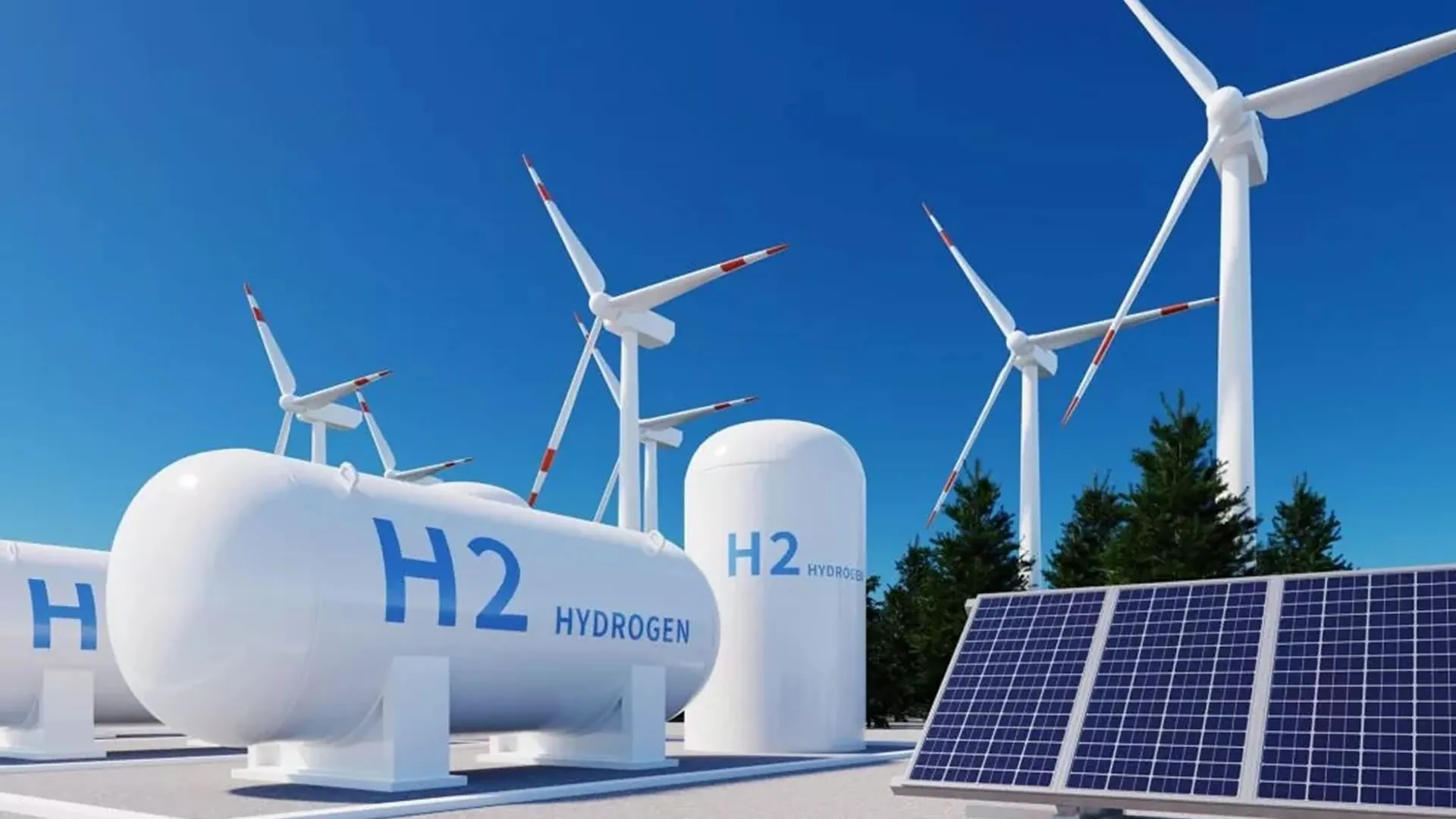
In a major breakthrough for clean energy, researchers at Oregon State University have developed an innovative light-powered material that could dramatically lower the cost of producing green hydrogen from water. The scientific study, led by Kyriakos Stylianou at the OSU College of Science, introduces a specially designed photocatalyst capable of using solar light to split water and generate hydrogen gas efficiently. This milestone addresses one of the most persistent bottlenecks in the global transition to renewable fuels—the high financial and environmental costs associated with standard green hydrogen production.
At the core of this technology is a advanced metal-organic framework known as BVR-19, which operates on an unprecedented sulfur-based chemical mechanism. Metal-organic frameworks are porous, highly customizable crystalline materials consisting of metal ions linked together by organic molecules. While conventional solar-driven photocatalysts rely on expensive, rare noble metals like platinum or iridium to accelerate hydrogen evolution reactions, BVR-19 relies on its own organic components to drive the process. Within BVR-19’s organic structure lies an unusual disulfide bond that temporarily breaks when exposed to light, generating highly reactive sulfur species. By using this internal sulfur chemistry to drive charge transfer and chemical reaction steps, the material completely eliminates the need for expensive noble metal co-catalysts, drastically reducing raw material costs.
Beyond its low reliance on precious metals, BVR-19 offers significant manufacturing advantages because it can be synthesized spontaneously in water at room temperature. Traditional synthetic catalysts often require high thermal energy, toxic solvents, or intense pressure during fabrication, which adds a heavy environmental footprint and upfront financial cost to their production life cycle. In contrast, BVR-19 forms naturally in simple aqueous conditions without high heat or energy inputs. This green, low-energy synthesis process makes scaling up production far more practical, economical, and environmentally friendly.
This breakthrough directly addresses the severe price disparity currently separating dirty fossil fuels from clean hydrogen alternatives. At present, standard industrial hydrogen is produced through methane-steam reforming, an energy-intensive process relying on natural gas that costs roughly $1.50 per kilogram but releases significant carbon emissions. Conversely, green hydrogen produced through conventional electrolysis or precious-metal photocatalysts costs around $5.00 per kilogram, making it difficult to compete commercially in heavy industry, metal refining, ammonia production, and transportation. By lowering material and production costs, materials like BVR-19 help close the price gap between $1.50 gray hydrogen and $5.00 green hydrogen, bringing clean fuel closer to market parity.
Looking ahead, the development of BVR-19 opens up a brand-new blueprint for solar fuel design and catalyst engineering. Scientists have synthesized nearly 100,000 distinct metal-organic frameworks, with hundreds of thousands more computationally predicted. Demonstrating that simple organic bonds, like sulfur-sulfide linkages, can replace expensive metals establishes a new design rule for future solar-driven material development. Supported by organizations like the National Science Foundation and the Murdock Charitable Trust, researchers plan to further refine these frameworks to improve stability and efficiency, paving the way for next-generation solar hydrogen production systems powered purely by light and water.