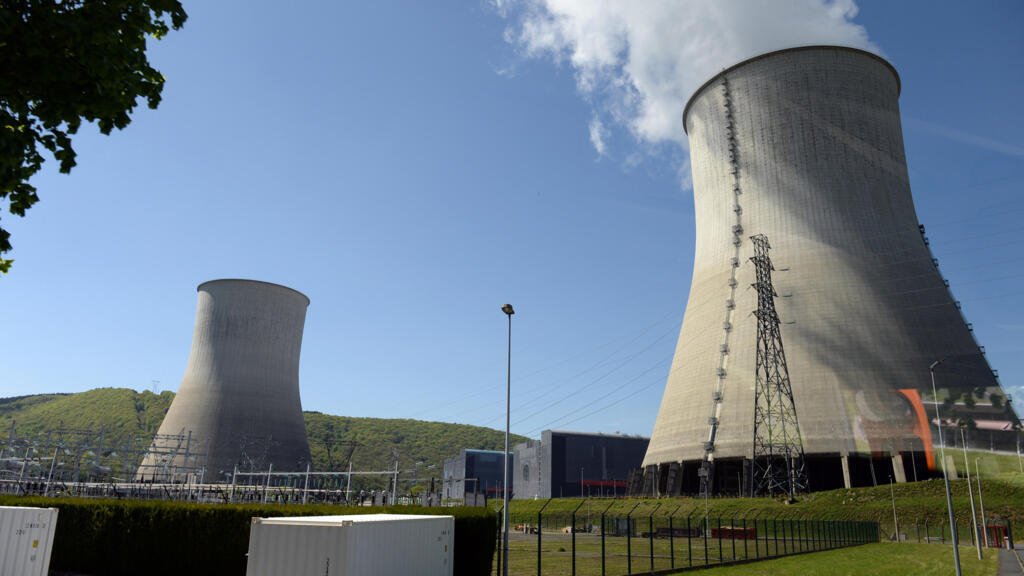
After a 17-year saga marked by staggering delays and budget overruns, France has finally connected its most powerful nuclear reactor, the Flamanville 3 EPR, to the national grid. The reactor, a next-generation European Pressurized Reactor (EPR) located in Normandy, was connected on December 21, 2024, marking the first time a new reactor had been started in France in 25 years . President Emmanuel Macron hailed the event as a “great moment for the country” and a testament to “re-industrialising to produce low-carbon energy,” framing it as a key part of his vision for a nuclear-powered industrial renaissance in France . The journey to this point has been extraordinarily arduous, with construction beginning in 2007 and the project originally projected to cost €3.3 billion.
However, the final price tag has ballooned to an estimated €13.2 billion, and the launch comes over a decade behind schedule, a consequence of a relentless series of technical setbacks . Despite these immense challenges, the event is a landmark victory for EDF and a powerful symbol of France’s unwavering commitment to nuclear energy, which already supplies about three-fifths of the country’s electricity . The initial grid connection was a major milestone, but it was just the beginning of a long and complex commissioning phase . The reactor was gradually ramped up, and its performance was meticulously tested at various power levels, eventually reaching 100% nuclear thermal power on December 14, 2025 . With a gross electrical output of 1,669 MW, the Flamanville EPR is now officially the most powerful reactor in the French nuclear fleet . This phase of intensive testing and validation was essential to confirm the reactor’s safety and functionality before it could enter its full operational cycle .
The final completion of the reactor’s commissioning tests was officially confirmed on April 27, 2026 . This declaration brought an end to the nearly two-year-long process that began with fuel loading in May 2024 and was punctuated by key events like its first criticality in September 2024 and its initial grid connection . Throughout this period, the reactor underwent a rigorous sequence of 34 tests designed to simulate various operating conditions, including load variations, planned shutdowns, and safety system validations, to ensure it could meet the stringent standards of a Generation III+ reactor .
The successful completion of a “full-power islanding test” in April 2026, which simulated a loss of the external grid while maintaining autonomous power supply to the plant’s internal systems, was one of the final critical technical demonstrations . While the project has crossed the finish line of its startup phase, the next major hurdle is already on the horizon. EDF is now preparing for the reactor’s first periodic outage, known as VC1, which is scheduled to begin on September 26, 2026 . This will be an enormous industrial undertaking, requiring a shutdown expected to last around 350 days . During this period, the plant will undergo heavy maintenance, in-depth inspections, and regulatory checks, including the replacement of the reactor vessel head .
The operation is set to mobilize 2,500 personnel and involve nearly 20,000 technical operations, underlining the immense logistical effort required to maintain even the most modern nuclear technology . In the lead-up to this major inspection, even the successful startup phase has been marked by minor operational events. In February 2026, several Level 0 safety events on the INES scale were reported, including a leak of 207 litres per hour from a sampling circuit that slightly exceeded the operational limit and a delay in repairing a main generator, events which had no actual impact on the safety of the installations . These incidents, though minor, highlight the demanding nature of bringing a new reactor to full operational status, where even small procedural errors are tracked and corrected .
The completion of the Flamanville EPR, despite its painful history of cost overruns and delays, is a crucial triumph for EDF and the French nuclear industry as it embarks on an even more ambitious plan to build a new generation of reactors known as EPR2 . The success of Flamanville, however, comes with a stark warning from the French Court of Auditors, which has noted that the new EPR2 programme is “far from ready” and still faces “many challenges” . With EDF still heavily in debt and the financing for the massive EPR2 plan yet to be secured, the landmark achievement at Flamanville serves as both a symbol of France’s nuclear capability and a reminder of the immense costs and complexities involved in such projects . The lessons learned from the Flamanville project, including the use of feedback and risk analysis, are now being applied to future builds, but the shadow of its problems still looms over projects in the UK and the credibility of the broader EPR program . As France prepares for a “renaissance” of its nuclear industry, the Flamanville EPR now stands as a powerful, operational beacon, providing low-carbon electricity for upwards of two million homes and proving that even the most troubled of projects can, eventually, be brought to life .