Türkiye has taken a decisive step toward joining the small club of nations that have reached the Moon, as its first domestically developed lunar spacecraft has completed production and assembly and entered a critical environmental testing phase ahead of a planned 2027 launch. Industry and Technology Minister Mehmet Fatih Kacır announced that the 3.5-metric-ton spacecraft has been transferred to Turkish Aerospace Industries (TAI) for system-level environmental tests. The milestone marks the culmination of years of work under Türkiye’s national lunar exploration program and positions the country to become the ninth nation in the world to conduct a lunar mission, according to Kacır.
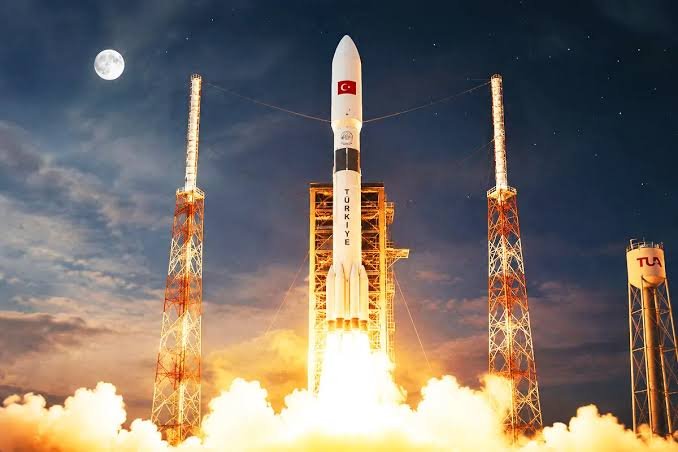
The spacecraft is scheduled to launch in the first months of 2027 from NASA’s Kennedy Space Center in Florida, a notable detail given that Türkiye is not launching from its own soil. Following launch, the craft will take approximately two months to reach a 100-kilometer polar orbit around the Moon. Once in lunar orbit, it is designed to operate for at least three months, with the potential to extend its mission to as long as a year and a half depending on system performance and scientific returns. During that period, the spacecraft will use homegrown scientific instruments to study solar winds, the mechanisms of water formation, the Moon’s magnetic fields, and surface radiation. These observations aim to contribute to the global understanding of lunar surface conditions and the interaction between the Moon and the solar wind, a key area of interest for future human and robotic exploration.
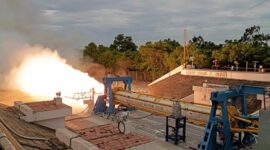
A defining feature of the mission is its high degree of domestic content: the spacecraft boasts an 80% domestic production rate. This includes critical flight, communications, and power systems originally developed for Türkiye’s earlier satellite projects, İMECE and Türksat 6A. The spacecraft also incorporates a homegrown hybrid propulsion system that will be used for orbit-raising maneuvers and, at the end of the primary scientific mission, a final controlled deceleration burn intended to reach the lunar surface. This propulsion technology represents a significant step for Türkiye’s space industry, as it will be tested in deep space for the first time.
The current testing phase at TAI is designed to verify that the spacecraft can survive the extreme conditions of launch and the space environment. Engineers will conduct thermal-vacuum tests to simulate the vacuum and temperature extremes of space, structural tests to recreate launch stresses, and electromagnetic compatibility tests to ensure the spacecraft’s systems can operate safely together. As Kacır noted, “The further tests will verify the spacecraft’s ability to withstand the harsh conditions it will encounter during launch and in the space environment”. Following these environmental tests, the craft will be transferred to a new cleanroom facility at the Turkish Scientific and Technological Research Institution (TÜBİTAK) Space for final inspections before shipment to the United States.
Minister Kacır framed the project as part of a broader push for “a fully independent Türkiye in critical technologies,” drawing a parallel to the country’s defense industry, which has pursued self-reliance in recent decades. “Only eight countries have carried out lunar missions so far, and when we implement our program, Türkiye will become the ninth country,” he said. The lunar mission is unfolding alongside several other space initiatives: Türkiye recently acceded to the Artemis Accords, the international framework promoting peaceful cooperation in lunar and deep space exploration. Ankara is also developing new communications and Earth-observation satellites, including the Turksat 7A and the İMECE-2 and İMECE-3 Earth-observation satellite constellation, and is working toward establishing an independent spaceport in Somalia to reduce reliance on foreign launch facilities.
The lunar spacecraft program is approximately 77% complete overall, according to one report, with the current testing and final inspection phases representing the remaining work before launch. The mission is expected to be showcased to the international space community at the International Astronautical Congress (IAC 2026), which Türkiye will host in Antalya from October 5–9, 2026, with nearly 10,000 participants from around the world expected to attend. If successful, the 2027 mission would not only secure Türkiye’s place among lunar-faring nations but also validate a suite of domestically developed deep-space technologies that could support future missions beyond the Moon.