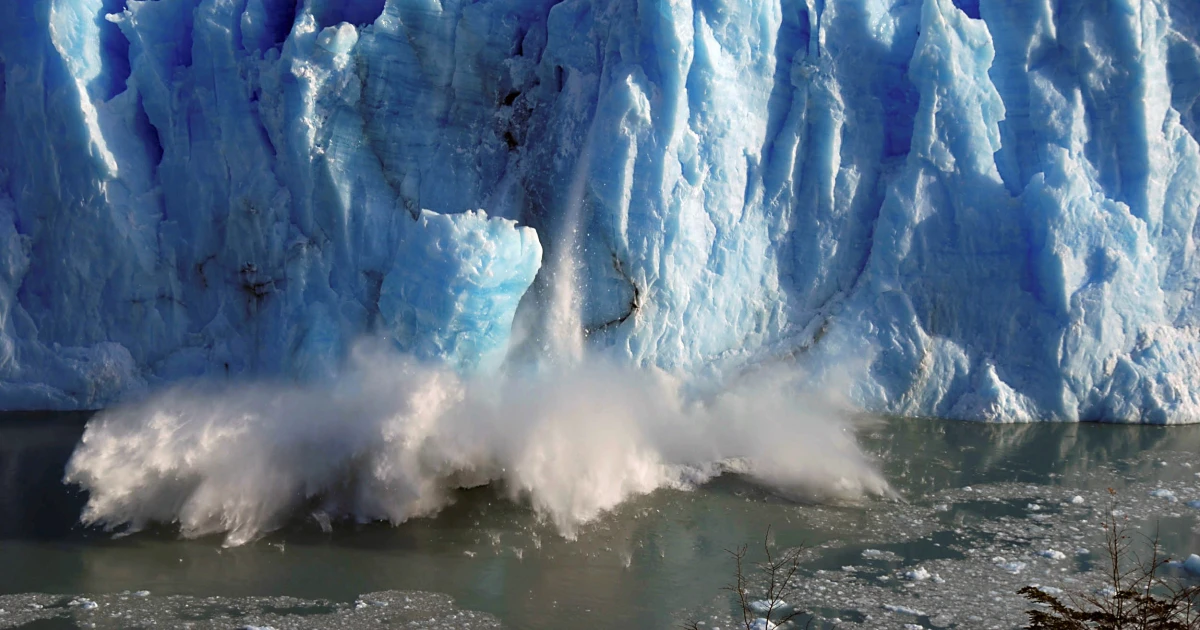
The catastrophic flash flood that struck the Nepal-China border region on August 26, 2026, has served as a stark and devastating reminder of the growing vulnerability of the Hindu Kush Himalaya to climate-related and geological hazards. This disaster, which caused extensive loss of life and severe damage to infrastructure, has refocused global attention on the escalating threat of Glacial Lake Outburst Floods (GLOFs) and the urgent need for robust mitigation strategies. As the world warms and glaciers retreat at an unprecedented rate, the risk posed by these sudden and destructive floods is no longer a distant possibility but a present and escalating reality for millions of people living in the shadow of the world’s highest peaks.
GLOFs are a specific type of flash flood that occurs when water stored in or around a glacier is suddenly released due to the failure of a natural dam. These dams are typically formed by moraines—accumulations of rock, sand, and debris left behind by a retreating glacier—or by ice itself. As glaciers melt, meltwater can accumulate in the depressions left behind, forming a glacial lake. The lake continues to expand, increasing the pressure on its unstable dam. The danger is compounded by the fact that when a dam fails, the released water moves rapidly downstream, picking up loose rocks, sediment, and debris, transforming from a lake outburst into a much larger, more destructive debris flow or flood capable of destroying roads, bridges, settlements, and hydropower infrastructure. The sudden release of water can also create temporary lakes by damming tributary valleys with debris, creating a cascading hazard that can extend the flood’s reach and impact far beyond the initial outburst location .
The 2026 Nepal-China event, while demonstrating the classic destructive power of a GLOF, also highlighted the complex and sometimes ambiguous nature of these hazards. Preliminary observations suggest that the immediate trigger was not simply the catastrophic breaching of a glacial lake dam, but rather a massive ice-rock avalanche and glacial collapse that sent a powerful surge of water, debris, and sediment into downstream river valleys . This mechanism is similar to the devastating February 2021 Chamoli flash flood in Uttarakhand, India, which was initially described as a GLOF but was later characterized as a massive rock-and-ice avalanche that generated a sudden debris flow . This distinction is crucial for accurate risk assessment and early warning, as a conventional GLOF begins with the sudden release of water stored in a glacial lake, whereas other events can be triggered by a sudden mass movement that impacts a glacier or river system. Glacier scientist Dipesh Chapagain, who led an international study on GLOF risks for the United Nations University Institute for Environment and Human Security (UNU-EHS), noted that the recent flooding near the Nepal-China border “has exposed a major weakness,” as Nepalese authorities only became aware of the flood when it was approaching the border, highlighting the immense challenges in detecting and communicating such transboundary hazards in time .
The fundamental driver of this escalating threat is climate change. The Hindu Kush-Karakoram-Himalaya (HKH) region is warming more rapidly than the global average, a phenomenon known as elevation-dependent warming. This accelerated warming is causing glaciers to retreat and thin at an alarming rate. A comprehensive review published in npj Natural Hazards in 2026 confirmed that the region is experiencing increasing temperature trends, with higher rates of warming observed in elevated areas, directly leading to a rapid increase in the number and size of glacial lakes . Research published in Nature Communications has found a strong correlation between global temperatures and GLOF frequency. The analysis showed that the frequency of moraine-dammed GLOFs has increased dramatically, from an average of 5.2 events per year in the 1980s to 15.2 events per year between 2011 and 2020, a nearly fivefold increase since 1950 . The study identified a critical ~20-year lag between warming effects and GLOF occurrence at the global scale, suggesting that the full impact of past warming is still unfolding and that future risks are likely to intensify further .
The mechanisms by which warming drives GLOF activity are multifaceted. Rising temperatures destabilize glaciers and the frozen slopes that surround glacial lakes, leading to a thermal shift from cold-based to polythermal or temperate glaciers, which alters the frequency and magnitude of ice avalanches and landslides. These mass movements are the dominant triggers for GLOFs, accounting for approximately 70% of outbursts in the Third Pole and Low Latitudes . Furthermore, as ice and permafrost thaw, slopes become increasingly susceptible to failure due to changes in precipitation and repeated freeze-thaw cycles. A detailed case study on the 2013 Ranzerio lake GLOF, also published in npj Natural Hazards, documented how accelerated glacier flow and the development of a large crevasse preceded an ice collapse from the glacier tongue into the lake, generating a displacement wave that overtopped and breached the moraine dam . This event illustrates how dynamic instabilities in a glacier, driven by its own retreat and mass loss, can directly trigger a catastrophic flood.
The scale of the threat is immense, with thousands of glacial lakes dotting the Himalayan landscape. According to government surveys, there are around 7,500 glacial lakes across the Himalayan range, with nearly 200 of them considered highly dangerous and in need of urgent attention . A 2026 study identified 2,377 glacial lakes in the China-Nepal Himalaya alone, of which 76 were assessed as potentially hazardous . Research published in Discover Geoscience highlights that with over 5,000 glacial lakes in the Himalayan region, and more than 200 classified as potentially dangerous, the region faces mounting hazards due to the expansion and instability of these lakes. Notable GLOF events, including those at Kedarnath in 2013, Gya in 2014, and the devastating 2023 South Lhonak disaster, underscore the urgent need for a proactive risk reduction strategy framework .
India has already witnessed one of its worst GLOF disasters in recent years. On October 3, 2023, a massive section of glacial rock collapsed into Sikkim’s South Lhonak Lake, triggering a flash flood down the Teesta river basin. Waves as high as 20 meters were recorded, sweeping through several hydropower projects and settlements, causing widespread devastation . This event prompted a comprehensive national review and the formulation of a high-level coordination committee to address GLOF risks. As part of these efforts, the government has approved Rs 150 crore under the National GLOF Risk Mitigation Programme (NGRMP) for four Himalayan states facing a high risk from glacial lakes . The NGRMP has identified 195 high-risk lakes . The threat is particularly acute in the Western Himalayas, with Jammu and Kashmir, Ladakh, Himachal Pradesh, and Uttarakhand being identified as vulnerable hotspots. A 2026 study of the Kashmir Himalaya mapped 155 glacial lakes using satellite data from 1992 to 2024, while in Himachal Pradesh, 67 vulnerable glacial lakes have been identified in high-altitude districts like Lahaul-Spiti and Kinnaur . In Uttarakhand, 13 glacial lakes have been classified as posing a credible risk of a GLOF .
Given the transboundary nature of these hazards, with rivers and glaciers crossing national boundaries, regional cooperation is paramount. The catastrophic flash flood on the Nepal-China border has renewed focus on the need for stronger cross-border early-warning and disaster-response systems involving China, Nepal, India, and Bangladesh . Such cooperation should include satellite monitoring, shared early warning systems, downstream evacuation protocols, and the sharing of river-basin data and GLOF-risk mapping . Former NDMA member Syed Safi Ahsan Rizvi stressed the need to work on five key areas on a large scale to reduce the threat posed by glacial lakes: risk assessment, monitoring, early warning, risk reduction, and community awareness . The Strengthening Climate Change Adaptation in the Himalayas (SCA-Himalayas) project, a Swiss-Indian initiative, has pioneered the use of detailed hazard and risk assessments and the deployment of state-of-the-art monitoring infrastructure. Automatic stations now provide real-time data on lake water levels, weather conditions, and slope stability, complemented by bi-weekly InSAR analysis, demonstrating a successful model for data-driven GLOF risk management .
Addressing the GLOF challenge requires an integrated and adaptive strategy that combines scientific evaluation, real-time monitoring, structural mitigation, stakeholder participation, and adaptive governance . While structural measures like engineered drainage channels and dam strengthening are crucial, non-structural measures are equally vital, especially in remote and resource-constrained areas. A study published in Discover Sustainability emphasizes the importance of community-based approaches, arguing that downstream populations are frequently the most affected by GLOFs but are also the first to respond. Empowering these communities through awareness campaigns, localised hazard maps, community-based early warning systems, and regular evacuation drills can significantly improve resilience and ensure faster, more effective responses during a crisis . For instance, in Pakistan’s Hunza Valley, local populations have historically used small-scale lake draining measures to reduce the risk of outbursts, demonstrating the value of integrating traditional knowledge with scientific approaches .
The rising frequency and severity of GLOFs are a direct consequence of human-induced climate change, and the problem is set to worsen in the coming decades. The increasing frequency and scale of these hazards complicate disaster preparedness, as a flood generated high in the mountains can cross administrative and national boundaries within a matter of hours, leaving downstream communities with limited time to respond . As glacial lakes continue to expand and become more unstable, the threat of a catastrophic GLOF will loom ever larger over the lives and livelihoods of millions of