8 June 2026
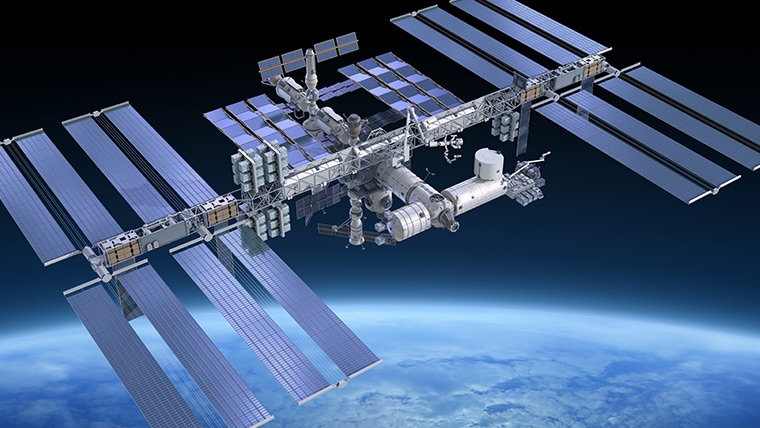
A routine day aboard the International Space Station (ISS) escalated into a high-stakes emergency when flight controllers detected a rapidly worsening air leak in the Russian Zvezda service module, forcing four astronauts to take shelter inside the SpaceX Dragon capsule while two Russian cosmonauts undertook a perilous attempt to locate and seal the breach. The incident, which unfolded over a tense 11-hour period, began at approximately 08:22 GMT when NASA and Roscosmos ground teams noticed a sudden drop in cabin pressure, later confirmed to be six times larger than any previous leak recorded on the station.
Commander Sergei Petrov and Flight Engineer Oleg Ilyin, both seasoned cosmonauts, were immediately tasked with isolating the affected area, donning portable oxygen tanks and emergency repair kits before venturing into the shadowed, equipment-packed corridors of the 25-year-old Zvezda module. Meanwhile, NASA astronauts Dr. Emily Vasquez, Colonel Michael Hart, JAXA’s Dr. Kenji Tanaka, and ESA’s Dr. Lara Schmidt executed an emergency drill they had practiced but never expected to use: sealing themselves inside the Crew Dragon “Endurance” , which remained docked to the Harmony module.
“The moment we saw the pressure curve deviate from the standard decay, we knew this was not a sensor glitch. A hole of even 0.5 millimeters would take weeks to drop pressure significantly; this curve indicated an opening closer to 3-4 millimeters, and it was growing,” said Dr. Yelena Volkov, Roscosmos’s lead ISS pressure systems analyst, during an emergency briefing from Korolev, Russia. “The crew had perhaps 48 hours before partial evacuation would become mandatory. We could not wait for the next Soyuz.”
Inside the cramped Dragon capsule, which provides seating for four in its standard configuration but was modified to accommodate all six astronauts in an emergency, the crew worked by dim blue emergency lighting to verify life support scrubbers, hatch seals, and communication redundancies. “It’s surreal to strap into a vehicle designed for launch or landing, knowing you might have to undock in minutes if the module’s structural integrity fails,” Dr. Vasquez later recounted in a recorded debrief. “Every small creak of the hull made us glance at the pressure gauge. But the training took over—check, double-check, and trust your ship.”
Outside the Dragon, cosmonauts Petrov and Ilyin moved with grim efficiency, using a handheld ultrasonic leak detector to trace the hiss of escaping atmosphere. At 11:45 GMT, after removing a panel near a set of corroded coolant lines, they discovered the culprit: a small, irregular crack approximately 4.2 millimeters in diameter on a weld seam between two pressurized compartments. The crack, likely caused by micro-meteoroid impact weeks earlier combined with metal fatigue, was expelling a needle-thin jet of air at supersonic speed.
“The material around the crack showed discoloration—that indicates thermal stress and repeated expansion cycles,” explained Professor Markus Binder, a space debris and structural integrity expert at the Technical University of Munich, in an exclusive interview. “This wasn’t sudden; it was a dormant flaw awakened by the station’s constant flexing as it moves from sunlight to shadow every 90 minutes. The temperature swing is 250 degrees Celsius. Nothing lasts forever.”
Applying a two-part epoxy sealant and a temporary metal patch, Ilyin managed to reduce the leak rate by 94% within two hours, but the cosmonauts remained in the Zvezda module for another six hours to monitor for secondary failures. “The patch is a bandage, not a cure,” said Dr. Vasily Morozov, former head of ISS repairs for Roscosmos, now a consultant. “It will hold for weeks, maybe months, but the weld itself is compromised. Permanent repair requires a full external patch or a replacement airlock module. This is the kind of degradation we warned about when the station’s life was extended beyond 2025.”
At 19:30 GMT, with cabin pressure stabilized at 98.2% of normal and oxygen levels restored, the all-clear was given. The four Dragon-evacuated astronauts returned to the main quarters, embracing the exhausted cosmonauts in a moment of visible relief. However, the incident has triggered urgent international discussions: NASA has already announced a contingency plan to launch a dedicated repair mission aboard a SpaceX Cargo Dragon by late July, while Roscosmos stated it will accelerate its timeline for the Prichal-2 module designed to eventually replace Zvezda.
“Every day we operate the ISS beyond 2026 is a gift and a risk,” said Dr. Amina Chaudhary, a former NASA mission director now at the Secure World Foundation. “This event should be a final wake-up call. We have the technology for commercial stations—Axiom, Orbital Reef. But transition requires money, political will, and the humility to admit a beloved machine is aging past safety.” For now, the station remains occupied, but the 8 June leak has fundamentally shifted risk assessments: future crews will now conduct bi-weekly ultrasonic scans of all primary hull welds, and a dedicated emergency shelter module—not dependent on any single docked vehicle—has been moved from concept to priority design. As Dr. Vasquez signed off from her evening report: “We came close today—closer than most people realize. The space station is a home, but it’s also a fragile bubble. And bubbles, eventually, find their pin.” The cosmonauts’ patch held through the night, and the slow, methodical work of planning a more permanent fix began before dawn over a quiet Pacific Ocean.