
July 21, 2026
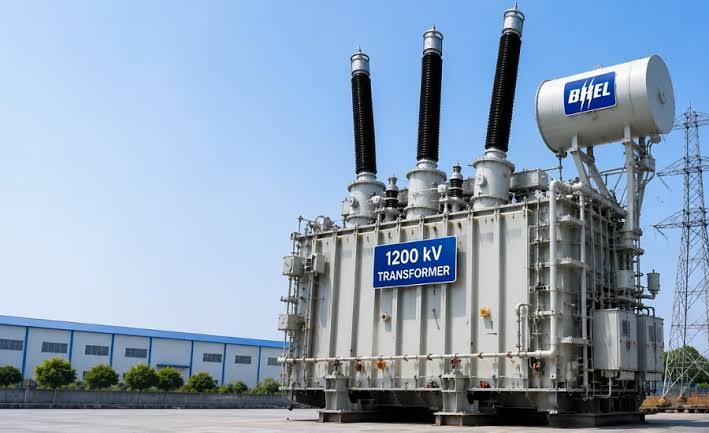
India achieved a historic milestone in its power sector with the successful development and deployment of its first indigenously manufactured 1200 kV Ultra High Voltage (UHV) transformer. This landmark achievement was spearheaded by Bharat Heavy Electricals Limited (BHEL), which built the transformer entirely in-house, marking a significant leap forward for the nation’s technological self-reliance and its ambitious energy infrastructure goals . The development of this transformer is not merely a domestic achievement but positions India as a key player in the global energy landscape, signaling its transition from a nation reliant on imported high-end power equipment to a formidable manufacturer capable of meeting its own colossal energy demands.
This single unit is rated at 333 MVA and is designed to facilitate the transmission of nearly 8000 MW of power per transmission line, drastically reducing long-distance transmission losses and strengthening the national grid . The culmination of this project is the result of years of dedicated research, development, and collaboration, reflecting a concerted national effort to upgrade the country’s power transmission infrastructure to meet the demands of the 21st century.
The journey to this historic achievement has been a long and complex one, with the first seeds planted years prior. The transformer was manufactured at BHEL’s facility in Bhopal, a site that has become synonymous with the company’s engineering prowess. While recent media reports have celebrated the feat as a fresh breakthrough, publicly available information reveals that the development of this 1200 kV UHVAC transformer has been an ongoing process for over a decade . The initial concept and prototype work on the 1200 kV system were part of a collaborative initiative with the Power Grid Corporation of India Limited (POWERGRID), the country’s central transmission utility, to build a state-of-the-art 1200 kV transmission system to supplement the existing 400 kV and 800 kV networks .
This ambitious plan was driven by India’s unique geographic challenges, where resource-rich generation centers, often located in remote areas, are situated far from the major urban and industrial load centers. A 1200 kV transmission system is a strategic solution, as it offers a viable and efficient option for bulk power transfer, capable of carrying vastly larger amounts of electricity over longer distances with minimal losses, while also requiring less land for transmission corridors and reducing the overall environmental impact . The technical challenges in designing and manufacturing a transformer of this magnitude are immense, involving novel design methods such as the use of a bank of three single-phase three-winding autotransformers, and require exceptional precision to manage the unprecedented voltage and electrical stress .
The successful commissioning of this equipment is a direct result of early technological partnerships and a strong commitment to indigenous manufacturing. A pivotal moment in this journey occurred in 2016, when ABB, a global technology leader, developed, manufactured, and energized a 1,200 kV power transformer at its state-of-the-art Vadodara facility in India, which at the time represented the highest alternating current voltage level in the world . This transformer was installed at the national test station in Bina, Madhya Pradesh, serving as a crucial testing ground for the 1200 kV technology and laying the foundational knowledge for subsequent indigenous efforts .
This early success demonstrated the technical viability of the project and inspired confidence in the nation’s ability to achieve such a monumental goal. Over the years, India’s power sector has seen significant foreign and domestic investment in ultra-high voltage technology. For example, GE Vernova has been a major partner in India’s grid modernization, securing massive orders to supply over 70 units of 765 kV class transformers for renewable energy corridors, and manufacturing them locally at its own facility in Vadodara . These collaborations have been instrumental in building the local expertise and supply chains necessary to ultimately produce a 1200 kV transformer entirely in-house.
BHEL’s achievement on July 21, 2026, represents the culmination of these decades of effort and ambition. It signifies that India has successfully absorbed and advanced critical technologies, moving from localized assembly to complete indigenous manufacturing. While some reports have noted that Indian manufacturers have previously relied on imported core components such as high-end iron cores and insulation materials, the BHEL project is a testament to the country’s progress toward complete self-reliance . Other Indian manufacturers, such as Transformers & Rectifiers (India) Ltd (TARIL), also possess the capability to produce transformers up to the 1200 kV class, further underscoring the sector’s growing maturity and capacity .
The testing and validation of BHEL’s new 1200 kV transformer will be conducted at the National Test Station in Bina, the very site where the initial ABB transformer was installed years ago, bringing the project full circle . Upon successful validation, the technology is expected to be commercialized, paving the way for the creation of a massive network of 1200 kV transmission “superhighways” across the country . This will be essential for integrating the vast renewable energy capacity planned for the coming years, ensuring that power generated in sunny and windy states like Rajasthan, Gujarat, and Tamil Nadu can be efficiently transmitted to the national grid to meet the growing demand . The successful development of the 1200 kV transformer is more than a technological achievement; it is a strategic victory for India’s energy security, economic growth, and its ambition to become a global hub for advanced power equipment manufacturing.