
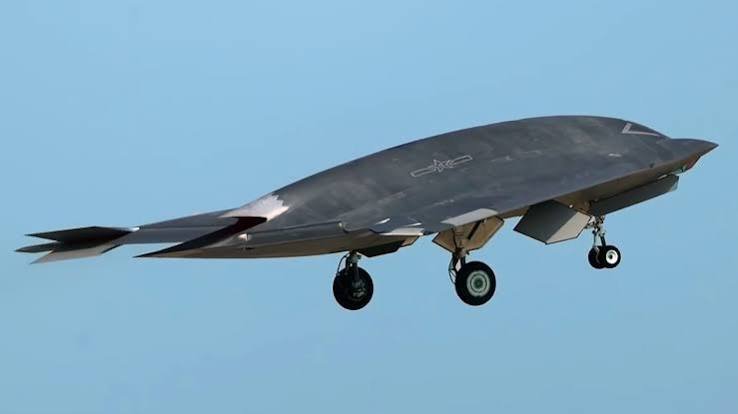
The GJ-11 Sharp Sword (known in Chinese service as the Mysterious Dragon) represents a cornerstone of modern military aviation, functioning as an advanced stealth unmanned combat aerial vehicle (UCAV) developed jointly by the Shenyang Aircraft Design Institute and Hongdu Aviation Industry Group under the Aviation Industry Corporation of China (AVIC). Originating from a development program initiated in the late 2000s, the platform completed its maiden flight in November 2013 and was first publicly unveiled during the People’s Republic of China’s 70th-anniversary military parade in Beijing in October 2019. Since entering active service with the People’s Liberation Army Air Force (PLAAF) and undergoing continuous operational trials at strategic locations like Shigatse Peace Airport, the GJ-11 has emerged as a premier asset designed to penetrate heavily contested, radar-dense air defense networks and execute high-precision offensive tasks.
Architecturally, the GJ-11 utilizes a tailless flying wing configuration engineered explicitly for minimal radar cross-section (RCS). With an approximate length of 12.2 meters and a wingspan of 14.4 meters, the aerodynamic layout eliminates vertical and horizontal stabilizers, significantly reducing its profile across electromagnetic and infrared spectra. Its structural composition heavily incorporates radar-absorbing materials (RAM) and smooth, continuous skin contours. The airframe design features a distinctive dorsal air intake positioned on top of the fuselage and a specialized, flattened rear exhaust nozzle configuration that shields thermal emissions from ground-based infrared tracking systems. These meticulous stealth geometry treatments ensure that the aircraft can slip undetected past advanced early-warning radars and surface-to-air missile systems.
To preserve its low-observable signature during flight, the GJ-11 is designed with two internal weapons bays situated beneath the fuselage. These internal compartments feature serrated bay doors that prevent radar wave diffraction. The aircraft boasts a payload capacity of up to 2,000 kilograms (4,400 lbs), enabling it to carry a diverse array of precision-guided munitions, including internal guided bombs, air-to-surface missiles, and specialized electronic warfare packages. By housing its ordinance internally, the drone avoids the radar reflections typically generated by external hardpoints, allowing it to maintain an optimal stealth profile while carrying enough lethal payload to neutralize high-value ground targets, command nodes, and radar installations.
Propulsion is provided by a single Guizhou-built turbofan engine of classified specification, enabling high subsonic performance. The GJ-11 achieves a maximum speed of roughly 1,000 km/h to 1,111 km/h and boasts an impressive operational range of up to 4,000 kilometers with an endurance extending to approximately 6 hours. This expansive combat radius gives the PLAAF deep-strike capabilities well beyond traditional regional boundaries, enabling persistent surveillance and rapid-strike operations across distant theaters. Furthermore, the platform’s advanced flight control systems and onboard automation allow for fully autonomous navigation, take-off, and landing sequences, drastically reducing human pilot workload during complex combat scenarios.
Beyond independent strike missions, the GJ-11 is heavily integrated into modern manned-unmanned teaming (MUM-T) frameworks. Often categorized as a “loyal wingman”, the drone is engineered to operate in close tactical coordination with crewed fighter aircraft such as the Chengdu J-20 stealth fighter and the J-16D electronic warfare aircraft. In these joint operational paradigms, the GJ-11 acts as the “eyes and ears” of crewed platforms, flying ahead of formation packages to conduct advanced aerial reconnaissance, draw enemy fire, act as an electronic decoy, or execute suppression of enemy air defenses (SEAD) strikes while remaining under the strategic direction of human commanders.
The evolution of the platform has also expanded into the maritime domain through the development of the GJ-21 (or GJ-11J) naval variant. Designed specifically for carrier-based operations, the naval iteration features structural enhancements including folding wings, an integrated arrestor hook, and a double nose gear equipped with a catapult launch bar. This configuration allows the aircraft to conduct CATOBAR (catapult-assisted take-off but arrested recovery) launches from advanced Chinese aircraft carriers like the Fujian as well as take off autonomously from large-deck amphibious assault ships like the Type 076. By bridging land-based strategic bombing and carrier-borne naval aviation, the GJ-11 series cements China’s position at the forefront of autonomous stealth combat technology.