June 20, 2026
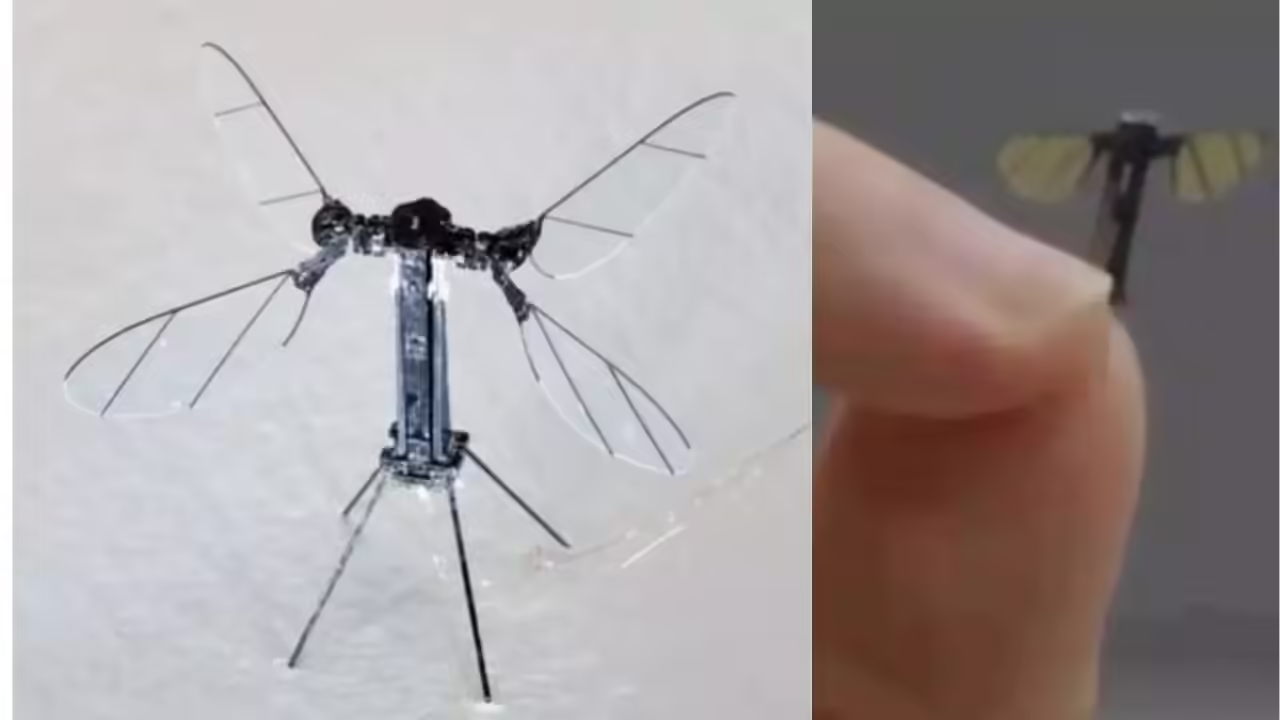
Chinese state-run military broadcaster CCTV-7 showcased a groundbreaking development in surveillance technology: a micro-drone designed to mimic the size and appearance of a common mosquito, which was developed by researchers at the National University of Defense Technology (NUDT) . This biomimetic device, weighing less than 0.3 grams and measuring approximately two centimeters in length, represents a significant leap in covert intelligence-gathering capabilities, as it is designed to be virtually indistinguishable from an ordinary insect to the naked eye at a distance, enabling it to bypass traditional detection methods like metal detectors and CCTV systems .
The drone’s design is a marvel of engineering, featuring ultra-thin legs nearly as fine as human hair and wings that flap at an astonishing 500 times per second to replicate the motion and near-silent flight of a live insect, a stark departure from the noisy rotary blades of conventional drones . Despite its diminutive size, the mosquito drone is packed with advanced technology, integrating a miniature camera, a tiny microphone, and various sensors capable of capturing images, audio, and even electronic signals, all while being controlled remotely via a smartphone from a discreet location, making it an ideal tool for clandestine operations such as indoor monitoring in secure meeting rooms or battlefield reconnaissance .
A student at NUDT, Liang Hexiang, stated that “miniature bionic robots like this one are especially suited to information reconnaissance and special missions on the battlefield,” highlighting its primary role for military intelligence . However, despite its impressive stealth features, the technology is still in its early stages and faces significant limitations, including a flight autonomy of only one to three minutes due to a restricted battery life, a fragile structure, and a high susceptibility to being blown off course by strong winds because of its incredibly light weight, which are key technical hurdles that researchers are actively working to overcome .
The unveiling of this spy drone underscores a strategic shift in military innovation, focusing on low-visibility, high-precision intelligence-gathering tools that operate below traditional detection thresholds, with global experts suggesting the real potential may lie in deploying coordinated swarms of these micro-drones, which could be integrated with artificial intelligence to provide a significant strategic advantage in asymmetric warfare scenarios . While countries like the US and Norway have been developing similar technologies, such as the palm-sized Black Hornet drone, the Chinese mosquito drone represents a radically different frontier in the pursuit of biological mimicry for espionage, though its immediate battlefield impact is viewed with caution by Western analysts due to its current operational constraints .