The U.S. military executed its largest single-day escort and strike operation since the outbreak of war with Iran on Tuesday in the Strait of Hormuz, simultaneously shepherding a convoy of 40 commercial tankers carrying an estimated 18 million barrels of oil through the critical waterway while unleashing devastating strikes on nearly 60 Iranian military targets scattered across the coastal region. The operation, which unfolded over less than 24 hours, shattered multiple records and marked a decisive turning point in the conflict, signaling a fundamental shift in Washington’s military priorities from dismantling Iran’s nuclear infrastructure to securing dominance over the world’s most vital maritime choke point.
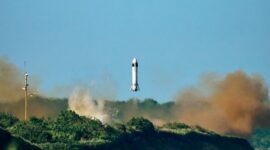
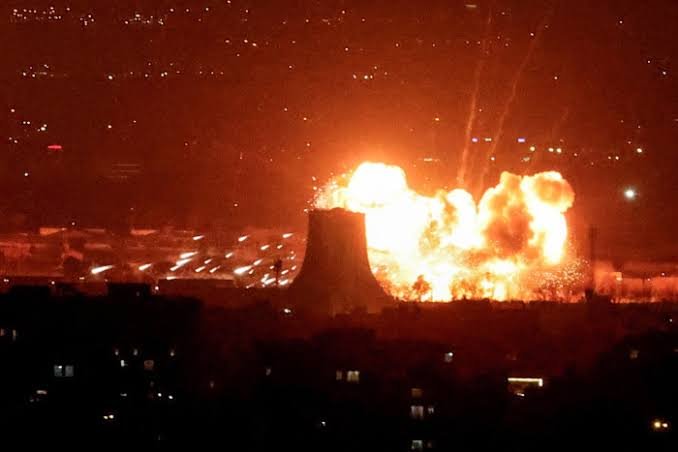
The “record day” of strikes reflects the Trump administration’s strategic pivot: reorienting military assets from destroying Iranian nuclear facilities to suppressing Tehran’s ability to threaten commercial shipping near the Strait, while simultaneously maintaining a naval blockade to sustain maximum economic pressure on Iranian ports. According to two U.S. officials familiar with the operation who spoke to CNN, the previous priority of neutralizing Iran’s nuclear program has been effectively “shelved” for the time being, with U.S. Central Command receiving explicit orders to concentrate all available firepower on the Strait of Hormuz and stop the flow of oil in and out of Iranian harbors. To achieve this monumental objective, American forces orchestrated a complex, multi-domain battle plan that integrated air, naval, space, and cyber assets in a coordinated assault. Throughout the convoy’s perilous transit, U.S. warships and aircraft repelled multiple waves of Iranian drone swarms and destroyed several anti-ship cruise missiles that had been launched toward the formation. The nearly 60 targets struck over the course of the day included a wide-ranging roster of Iranian military infrastructure: air defense batteries, early-warning radar systems, naval surface assets, mine-laying vessels and storage facilities, coastal communication nodes, and command-and-control centers—all carefully selected to systematically degrade Iran’s ability to track, target, and interdict shipping traversing the strait.
U.S. military officials described the new tactical approach as a “mowing the grass” or “whack-a-mole” campaign of attrition, aimed not at a single knockout blow but at the continuous, relentless destruction of Iranian radar arrays, air-defense systems, and anti-ship missile launchers that Tehran rapidly rebuilds and redeploys along the coastline. This strategy, officials argue, is designed to keep Iran off-balance and force its military to exhaust resources in a defensive posture rather than mounting offensive operations against international shipping. President Donald Trump, briefed on the operation’s progress, publicly emphasized the effectiveness of this targeted degradation, stating from the White House: “They were trying to see those ships… but they couldn’t see them, because they had no radar—because we blew up their radar, and last night we blew up far more than just their radar.” The president’s remarks underscored the administration’s satisfaction with the operation’s outcome, while also hinting at the broader scope of destruction that extended beyond radar sites to include mobile missile batteries and coastal defense positions.
Beyond the immediate tactical victories, the 18 million barrels of oil successfully escorted through the strait represent a critical economic and diplomatic achievement, ensuring that global energy markets remained supplied despite the heightened military tensions and demonstrating to U.S. allies in Europe and Asia that Washington can guarantee safe passage for vital petroleum shipments even in the face of Iranian aggression. Concurrently, the U.S. naval blockade around Iranian ports, enforced by carrier strike groups and destroyer squadrons, has effectively choked off nearly all seaborne exports from Iran, applying a level of economic pressure that administration officials believe will eventually force Tehran to the negotiating table. However, military analysts and former Pentagon officials have voiced serious concerns about the sustainability of this “whack-a-mole” approach, warning that while the U.S. can destroy dozens of targets per day, Iran’s ability to rapidly deploy inexpensive drones, mobile launchers, and small attack craft means that the threat to shipping could regenerate within hours or days, necessitating an endless cycle of strikes that risks drawing American forces deeper into a protracted and costly conflict. Moreover, the decision to sideline strikes on nuclear facilities has drawn sharp criticism from some national security hawks, who argue that Iran will use the pause to accelerate its uranium enrichment activities and inch closer to a nuclear weapon, thereby trading a long-term existential threat for a short-term gain in maritime security.
The operation also showcased the unprecedented integration of space-based surveillance and real-time intelligence sharing with regional allies, including Saudi Arabia, the United Arab Emirates, and Israel, all of whom provided overflight clearance, logistical support, and secondary targeting data that significantly enhanced the speed and accuracy of U.S. strikes. U.S. officials confirmed that the 60 targets were struck with a combination of precision-guided munitions from F-35 and F/A-18 fighter jets, Tomahawk cruise missiles launched from destroyers, and air-to-surface missiles fired from MQ-9 Reaper drones, achieving a reported 95% success rate in hitting designated objectives. The Pentagon released imagery showing massive secondary explosions at several Iranian ammunition depots and radar installations, indicating that the strikes had ignited stored munitions and caused extended damage well beyond the initial impact points. On the Iranian side, state media acknowledged “multiple aggressions” against coastal defense positions but provided no casualty figures, while Iranian military commanders vowed retaliation, raising the specter of further escalatory cycles in the days ahead.
For the crews of the 40 tankers that successfully cleared the Strait on Tuesday, the journey was harrowing but ultimately triumphant, with naval escorts maintaining a tight defensive perimeter while electronic warfare aircraft jammed Iranian targeting systems and deployed decoy flares to confuse incoming missiles. The successful transit meant that nearly 18 million barrels of crude—enough to satisfy roughly 20% of global daily demand—reached open ocean and headed toward refineries in Asia, Europe, and the Americas, averting an immediate price spike that many analysts had predicted would occur if the convoy had been turned back or attacked. Yet the underlying reality remains fragile: Tuesday’s record day, while a tactical masterpiece, does not constitute a strategic endgame. U.S. commanders on the ground acknowledge that Iran retains a vast arsenal of anti-ship missiles, unmanned attack vessels, and shore-based rocket systems that can be repositioned and fired at short notice, meaning that every future convoy will require similarly massive protective assets, stretching U.S. naval resources across the region. Furthermore, Iran’s demonstrated willingness to endure heavy strikes without capitulating suggests that the “mowing the grass” doctrine may produce diminishing returns, as Tehran becomes more adept at concealing its launchers and dispersing its forces, forcing the U.S. to expend increasingly expensive munitions against cheaper, easily replaceable targets.
As the Biden administration and international observers watch closely, Tuesday’s operation has already reshaped the geopolitical calculus in the Persian Gulf, with oil prices experiencing a brief spike that stabilized after news of the successful convoy transit reached markets. European allies, while privately expressing unease at the aggressive posture, have publicly reaffirmed their support for freedom of navigation, though several have quietly accelerated their own contingency planning for alternative oil supply routes in case the Strait becomes untenable. Inside the Pentagon, planning is already underway for follow-up operations, with officials hinting that the “record day” may soon be surpassed if Iran continues its provocative actions, effectively locking both nations into a cycle of escalation that shows no sign of de-escalation. For now, the U.S. military has proven its ability to deliver a punishing, synchronized blow while achieving its immediate convoy objective, but the broader question—whether this campaign can coerce Iran into a new nuclear deal or will simply bleed both sides in a protracted war of attrition—remains unanswered, hanging over the Strait like the smoke from Tuesday’s devastating fires.