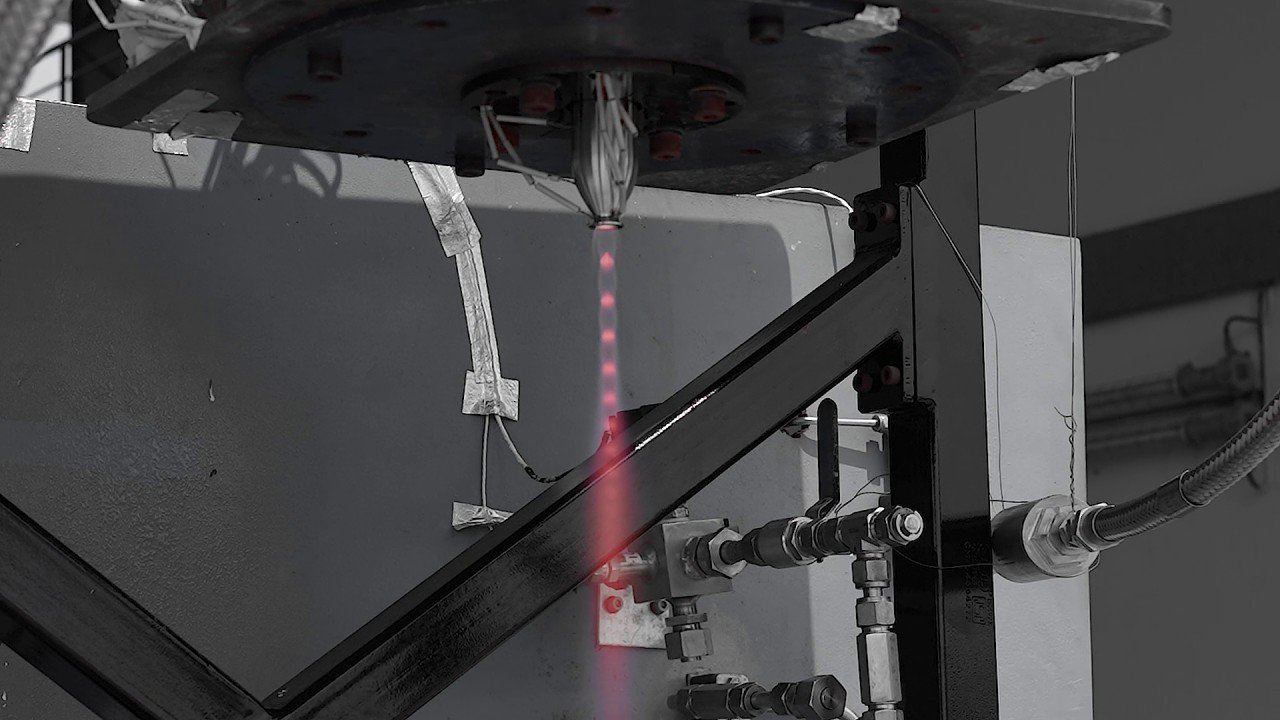
Skyroot Aerospace, a pioneering Hyderabad-based space technology startup, has successfully completed a critical test fire of its Raman-1 thruster, marking a major technical milestone as the company gears up for the second orbital mission of its flagship Vikram-1 rocket. Named after the legendary Indian physicist Sir C.V. Raman, the Raman-1 thruster is an essential reaction control system (RCS) component engineered to manage the rocket’s roll, orientation, and precise attitude control during flight. By successfully clearing this rigorous evaluation test on the test stand, Skyroot has demonstrated the reliability and readiness of its indigenous propulsion systems, ensuring the vehicle can maintain absolute stabilization through atmospheric and orbital phases.
The upcoming launch follows the historic success of Mission Aagaman, the maiden orbital flight of Vikram-1. Executed successfully, that landmark mission established India as one of the very few nations globally—alongside the United States and China—to successfully achieve private orbital launch capability on its very first attempt. Vikram-1 is an advanced, four-stage expendable small-lift launch vehicle built with a lightweight carbon composite architecture that drastically reduces structural mass while optimizing payload capacity. Its lower three stages utilize powerful solid propellant motors (including the Kalam series), while its upper segment features sophisticated liquid and reaction control engines designed for precise payload deployment into Low Earth Orbit (LEO).
At the heart of the vehicle’s precision maneuverability is its Orbital Adjustment Module (OAM), which relies heavily on advanced propulsion units like Raman-1. Utilizing a hypergolic propellant combination of Monomethylhydrazine (MMH) and Nitrogen Tetroxide (N2O4), Raman-1 thrusters are built using cutting-edge 3D-printing technology. Additive manufacturing allows Skyroot to drastically reduce component counts, streamline production timelines, and construct complex internal cooling channels and metal matrix composite throats capable of handling extreme thermal and mechanical stresses. These thrusters are capable of executing rapid, micro-second pulses to fine-tune the rocket’s trajectory and ensure exact orbital insertion parameters are met.
As preparations intensify at the launch site, Skyroot’s upcoming second flight serves as a crucial stepping stone toward routine commercial launch operations. Following the rapid growth of India’s private space sector—bolstered by visionary policy reforms and institutional facilitation through IN-SPACe—Skyroot has scaled its workforce past 1,000 employees and achieved unicorn status. By validating sub-systems like the Raman-1 thruster ahead of Flight 2, the company continues to solidify India’s competitive standing in the fast-expanding global small-satellite launch market.