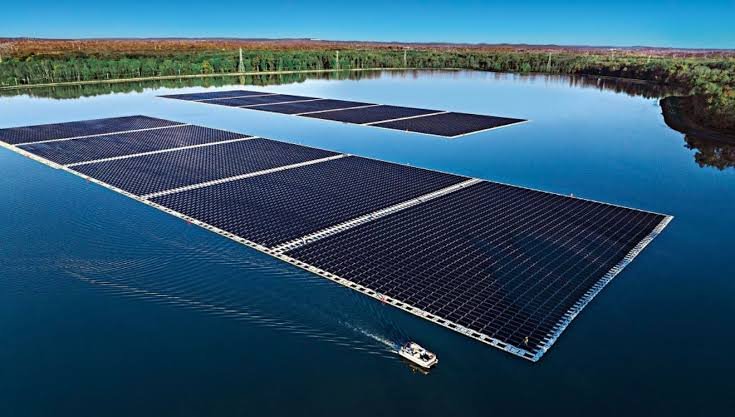
To directly study how the infrastructure interacts with underwater life, researchers submerged 20 artificial biohut cages filled with empty shells beneath different sections of the floating platform. Because many freshwater organisms struggle to attach themselves to smooth artificial plastics and metals, the rough, porous surface of the shells provided crucial physical anchorage for microscopic organisms and larvae. Over the course of the three-year study, scientists used underwater remotely operated vehicles (ROVs) equipped with sensor arrays to record physical water parameters alongside biological colonization patterns. Rather than documenting environmental decay, researchers observed an entirely unexpected ecological succession as life rapidly established itself beneath the array.
The findings revealed that the artificial structures and shade had effectively created an underwater sanctuary and artificial reef system. Microorganisms and sponges colonized the shell matrices first, which in turn attracted larger freshwater invertebrates like mussels. By the conclusion of the monitoring period, scientists had cataloged nearly 2,000 invertebrates and over 400 fish utilizing the underwater habitat beneath the array. The dark, shaded zone produced by the floating panels above offered vital protection from overhead predatory birds, allowing juvenile fish to use the area as a safe nursery ground away from open-water predators.
While environmentalists worried about severe water quality degradation, water sensors confirmed that dissolved oxygen levels dipped slightly in the warm summer months but consistently remained within safe limits for local fish and invertebrates. The array also reduced surface wave turbulence, creating localized pockets of calm micro-environments beneath the structure that further encouraged species settlement. Researchers emphasized that Bomhofsplas was an industrial, sand-quarry lake with limited original biodiversity, meaning the biohuts provided complex habitat structure where almost none previously existed. Ultimately, the study demonstrated that incorporating targeted ecological features into floating renewable energy projects can convert industrial water bodies into thriving artificial habitats without compromising energy generation.