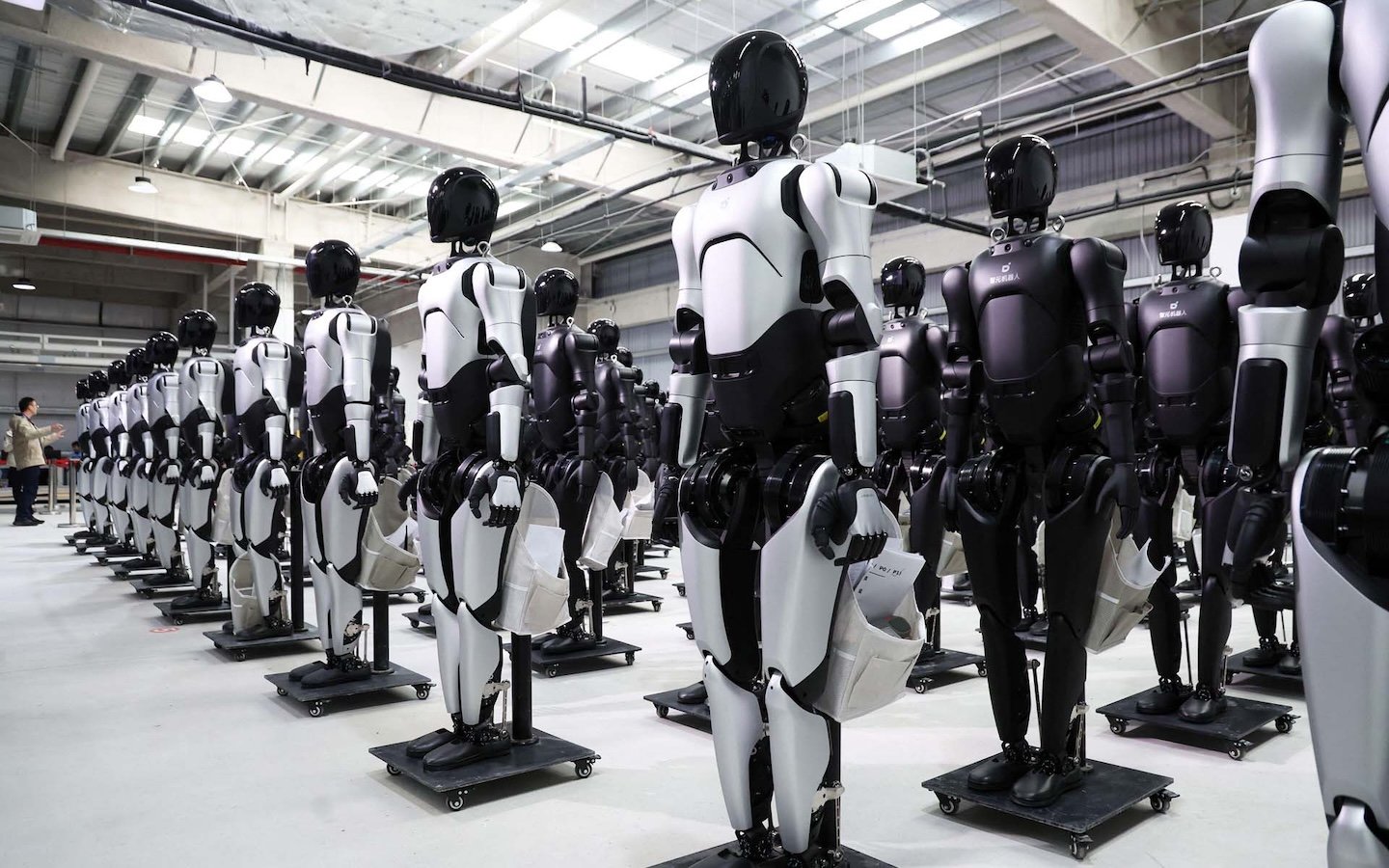
The summer of 2026 will be remembered as a pivotal moment when China’s humanoid robot industry decisively pivoted from dazzling displays of agility to tangible, real-world productivity, marking the dawn of a “Chinese humanoid revolution.” The narrative shifted dramatically from robots that can “run and jump” to those that can “think and work,” a transition vividly on display at the 2026 World Robot Conference in Beijing. The event hosted 373 enterprises showcasing over 3,000 products, but the focus was no longer on athletic stunts. Instead, robots were deployed in mock pharmacies, factory floors, and homes, performing tasks like intelligent sorting, equipment inspection, and even cooking. This pivot towards practical application is underpinned by staggering market dominance, with the first half of 2026 seeing China’s humanoid robot shipments surpass 40,000 units, capturing an unprecedented 97% of the global market share. This dominance is not merely about volume; the industry is demonstrating a formidable capacity for both technological innovation and rapid commercialization.
The commercial momentum is underscored by a series of landmark events signaling the industry’s coming of age. In a watershed moment, Unitree Robotics became the first humanoid robot maker to list on China’s A-share market on August 19, with its stock skyrocketing to a valuation that briefly touched 444.9 billion yuan. This financial milestone was quickly followed by massive private investment, with Xpeng’s robotics unit raising over $900 million in a single round, marking a record for China’s embodied AI sector. Major Chinese automakers, including BYD and Chery, are also aggressively entering the fray, leveraging their manufacturing expertise to compete with global players like Tesla. This financial frenzy, however, has prompted a note of caution from the National Development and Reform Commission (NDRC), which urged the industry to “prevent blind follow-up and rushing headlong into mass action” to ensure healthy and sustainable development, especially considering that over 11,600 new companies entered the sector in the first half of 2026 alone.
These robots are swiftly integrating into the fabric of the economy, moving from the laboratory to the workplace. In industrial settings, companies like UBTECH are deploying collaborative robot swarms on simulated production lines to perform complex tasks like automotive parts handling and machine loading, showcasing a leap from single-machine autonomy to “group intelligence”. The service sector is also being transformed, with Ant Lingbo’s robots already working in Shanghai pharmacies, autonomously fulfilling online orders to free up pharmacists for patient care. Even high-risk jobs are being targeted, as demonstrated by the Tiangong robot, which uses an “embodied brain and cerebellum” architecture to perform autonomous inspections of high-voltage electrical cabinets in collaboration with the State Grid. This industrial push is supported by a national strategy, with the Ministry of Industry and Information Technology (MIIT) actively working to advance the development of a national standard system for the industry to ensure quality and interoperability.
To prove their mettle, China’s humanoid robots have also rewritten the record books in spectacular fashion. At the second World Humanoid Robot Games, the Tiangong Ultra robot shattered the human 100-meter sprint world record with a time of 9.39 seconds and leaped a staggering 2.88 meters in the standing high jump, breaking a human record that had stood since 1993. These athletic feats, however, are a testament to rapid improvements in core technologies like joint motors, actuators, and end-side computing power, which are essential for practical tasks. Beyond physical prowess, robots are venturing into homes, with some now capable of folding laundry, cooking pasta, and even acting as companions, detecting human emotions and interacting supportively. As this technology moves from the spotlight of exhibitions into daily life, the focus is now turning to the final frontier: mass deployment and the creation of a robust after-sales infrastructure to support a world where robots are ubiquitous, with companies like JD already building service networks for in-home repairs.