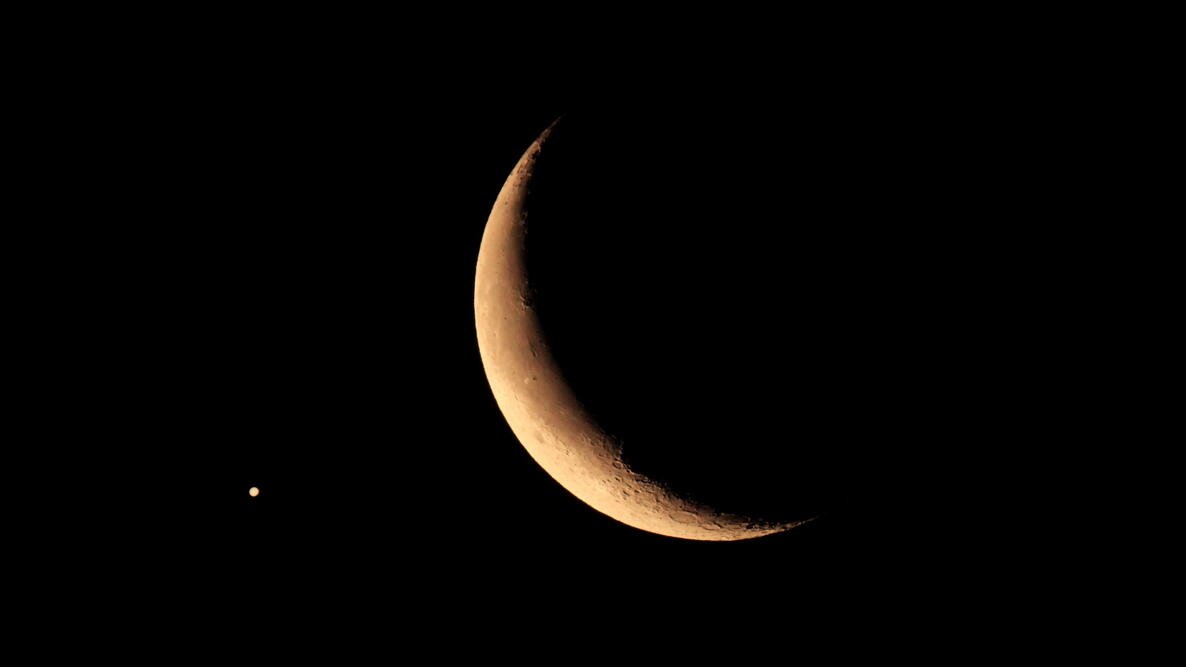
On the night of October 6, 2026, skywatchers across parts of the world will be treated to a rare and dramatic celestial event: Jupiter will disappear behind the moon in what astronomers call a lunar occultation. This occurs when the moon, in its orbit around Earth, passes directly between our planet and a distant celestial object, temporarily blocking it from view. In this case, the object is Jupiter, the largest planet in our solar system, and its disappearance will be visible to millions of people if they happen to be in the right place at the right time. An occultation is different from a conjunction or an appulse, where objects merely appear close together in the sky. During an occultation, the moon actually passes in front of the planet, causing Jupiter to vanish behind the lunar disk and then reappear on the other side. Because the moon has no atmosphere and appears as a sharp-edged disk, the disappearance and reappearance of Jupiter will be sudden and striking, making this event particularly exciting for both amateur and professional astronomers.
The occultation will be visible from parts of Europe, northern Africa, the Middle East, and western Asia, depending on local weather conditions and the altitude of the moon and Jupiter above the horizon. Observers in these regions will see the moon glide toward Jupiter and then cover it. The exact timing of the event will vary by location, typically within a window of a few hours. In some places, the occultation will occur during the evening hours, while in others it may happen closer to midnight or in the early morning. Because the moon and Jupiter are both bright objects, the event will be visible to the naked eye, though binoculars or a small telescope will greatly enhance the experience. Through optical aid, viewers may be able to watch Jupiter’s cloud bands and its four largest moons—Io, Europa, Ganymede, and Callisto—just before they are hidden behind the lunar limb. The disappearance and reappearance will each take only a few seconds, as Jupiter slips behind the moon’s edge, but the entire occultation—from first contact to last contact—can last anywhere from several minutes to more than an hour, depending on how centrally the planet passes behind the moon.
For astronomers, lunar occultations of planets are more than just beautiful sights. They provide valuable opportunities to study both the moon and the planet involved. By precisely timing when Jupiter disappears and reappears at different locations on Earth, scientists can refine our understanding of the moon’s topography and orbit. The sharp edge of the moon acts like a knife-edge in the sky, and the way Jupiter’s light is cut off can reveal tiny irregularities in the lunar limb. In addition, occultations can help confirm the positions and motions of planets with high accuracy. Although Jupiter is a well-studied world, occultations still offer a chance to test predictions and improve ephemeris data—the mathematical tables that describe the positions of celestial bodies. For amateur astronomers, the event is a chance to contribute to citizen science by recording timings and sharing observations with organizations such as the International Occultation Timing Association (IOTA). IOTA encourages observers to use video cameras or telescopes equipped with precise time signals to record the exact moment of disappearance and reappearance, which can then be analyzed alongside data from other locations.
The event will not be visible everywhere. Viewers in North and South America, most of eastern Asia, and Australia will miss the occultation, though they may still see Jupiter and the moon close together in the sky. For those in the visibility zone, the key to watching is to find a location with a clear, unobstructed view of the moon, ideally away from bright city lights. No special equipment is required, but a pair of binoculars or a small telescope will make the experience far more memorable. It is also important to check local weather forecasts, as clouds can easily ruin the view. Because the moon will be in a crescent or gibbous phase on October 6, 2026, depending on the exact time, its bright limb will contrast sharply with the dark lunar surface, making Jupiter’s approach and disappearance easier to see. The best views will occur when the moon is high in the sky, so observers should plan to watch during the hours when the moon is well placed. Smartphone apps and planetarium software can help predict the exact local time of the occultation, and many astronomy websites and YouTube channels will likely stream the event live for those who cannot see it in person.