July 19, 2026
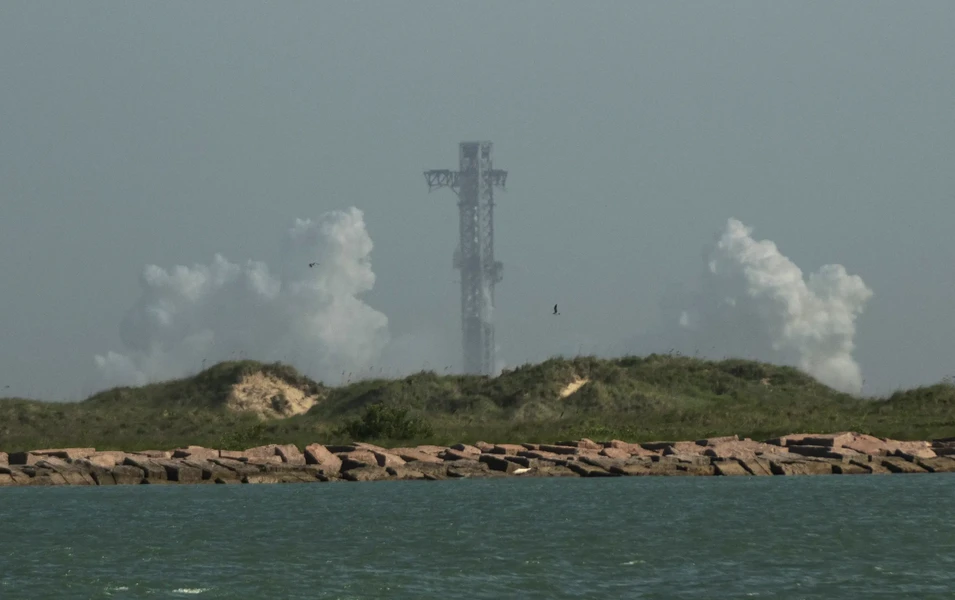
SpaceX’s highly anticipated Starship Flight 13 ended in a dramatic last-second abort at the company’s Starbase facility in South Texas, as four of the Super Heavy booster’s 33 Raptor engines failed to ignite during the critical startup sequence. The countdown had proceeded smoothly through propellant loading, with over 11 million pounds of liquid methane and oxygen loaded into the 124-meter-tall rocket, the largest and most powerful ever built. However, as the engines began to light up just three seconds before the scheduled 5:45 p.m. CT liftoff, the onboard computer detected the anomaly and triggered an automatic abort, immediately shutting down the 29 engines that had started and keeping the rocket firmly anchored to the launch pad. This marked the first time a full-scale Starship experienced a last-second abort of this nature, showcasing both the failure and the effectiveness of the automated safety systems designed to prevent a potentially catastrophic launch with insufficient thrust.
Following the abort, SpaceX founder and CEO Elon Musk took to his social media platform X to explain the situation, confirming that “some of the engines didn’t start, triggering an automatic launch abort,” and that the team was in the process of offloading propellant. In a subsequent update, he provided more detail, stating that two Raptor engines would be removed and replaced to ensure confidence in the next flight, with the most probable launch timing being “early next week”. This incident is a significant setback for the Starship V3 configuration, as Flight 13 was only the second test of this upgraded version, following Flight 12 in May 2026, which itself experienced engine reignition issues that prevented a controlled splashdown in the Gulf of Mexico. The mission was intended to be a major step forward, aiming to correct those prior mechanical problems and demonstrate a controlled descent and landing of both the booster and the upper stage, proving the rocket’s reusability and operational capabilities.
A crucial and unprecedented aspect of Flight 13 was its payload: the rocket was set to carry 20 operational next-generation Starlink V3 satellites for the first time. Unlike previous test flights that carried only mock-ups or dummy payloads, these advanced satellites were slated to be deployed on a suborbital trajectory to test their solar arrays, communication antennas, and high-capacity laser links with the existing Starlink constellation before burning up in the atmosphere approximately 20 minutes later. The V3 satellites represent a massive leap in capability, with each expected to provide downlink bandwidth of up to 1 terabit per second—10 times more than the current generation—and uplink speeds of 160 gigabits per second, or 22 times more, making their successful deployment critical for SpaceX’s long-term internet ambitions. The abort has therefore not only delayed a key rocket development milestone but also a critical expansion of the Starlink network, which now numbers over 10,000 working satellites in orbit.
The stakes for the Starship program have never been higher, as NASA has selected the Starship V3 variant for its Artemis III and IV lunar missions to return humans to the Moon, with the first crewed landing targeted for as early as 2028. Every delay in the test campaign tightens the timeline and adds pressure to SpaceX’s contractual obligations, especially with competitors like Blue Origin developing their own lunar lander as a potential alternative. Furthermore, the pressure to succeed is amplified by SpaceX’s recent public listing; the failed launch triggered a sharp market reaction, with shares falling more than 4% and briefly closing below their initial public offering price for the first time. While this approach of rapid, iterative testing has been a hallmark of SpaceX’s success, the failure of four engines to ignite is a clear indicator of persistent reliability challenges with the new Raptor 3 engines, and the team will need to work quickly to resolve the underlying issue to meet its ambitious goals and maintain its market position.