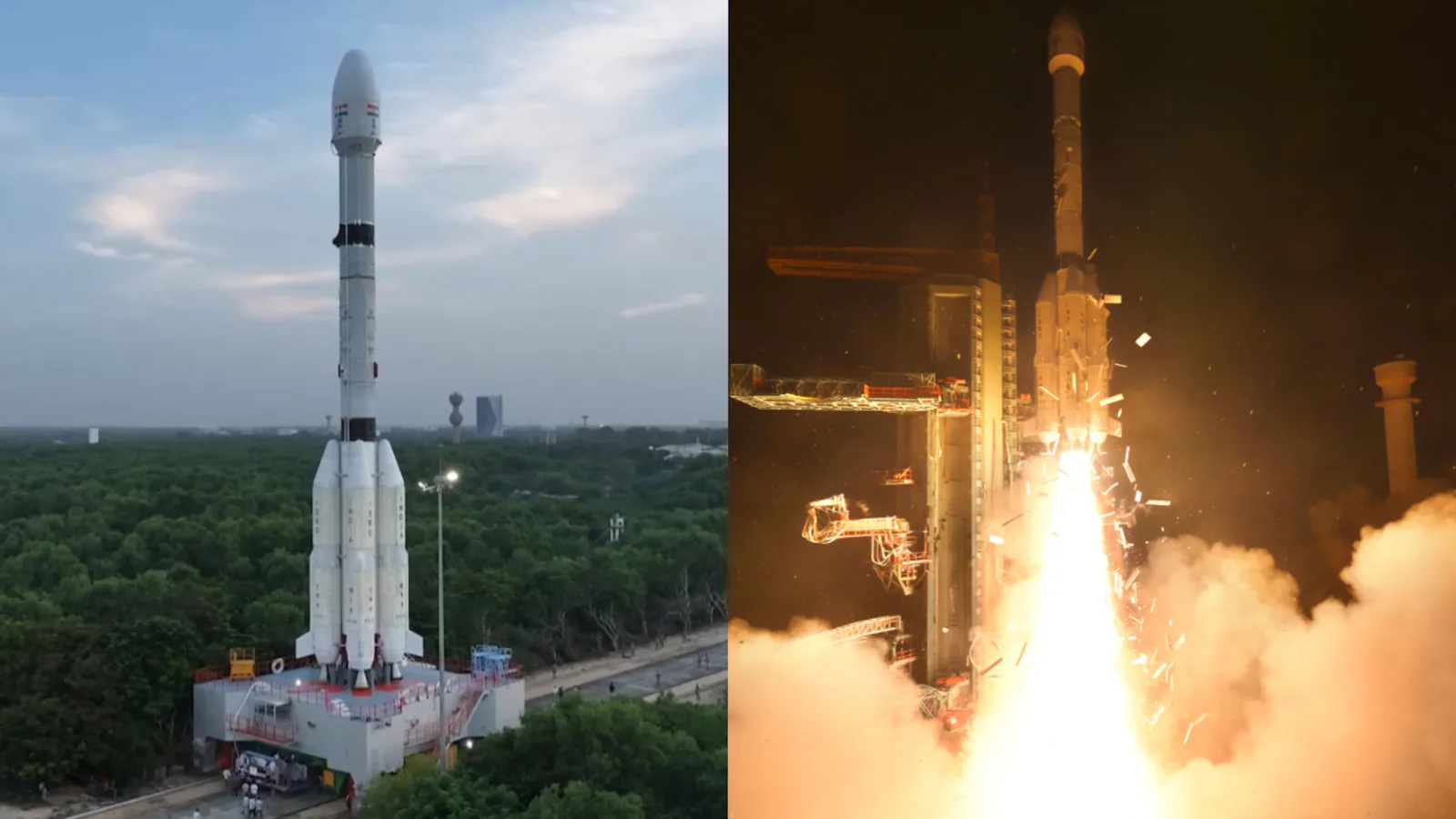
In the pre-dawn hours of September 4, 2026, as most of India slept, the Indian Space Research Organisation (ISRO) scripted a significant chapter in its history. From the Satish Dhawan Space Centre in Sriharikota, the Geosynchronous Satellite Launch Vehicle, GSLV-F17, lifted off at exactly 2:55 AM IST, carrying the state-of-the-art EOS-05 Earth observation satellite . This successful launch ended an almost eight-month drought for ISRO, marking its return to the launch pad after a difficult period defined by back-to-back failures of its Polar Satellite Launch Vehicle (PSLV) and serving as a powerful statement of the agency’s resilience and its ability to recover, regroup, and rebound from setbacks .
The mission was not just a success for ISRO but a monumental step for India’s space capabilities, as EOS-05 is India’s first-ever imaging satellite designed to operate from a geosynchronous orbit . While many Earth observation satellites function from Low Earth Orbit (LEO), providing periodic snapshots of the planet, EOS-05 will hover at a staggering altitude of approximately 36,000 kilometers . At this vantage point, the satellite matches the Earth’s rotational speed, allowing it to maintain a fixed position over the Indian subcontinent and its surrounding oceans . This geosynchronous orbit grants the satellite an unprecedented “continuous movie” capability rather than just intermittent pictures, enabling it to constantly monitor large areas and provide near real-time imagery . This “eye in the sky” is expected to be a game-changer for disaster management, allowing for rapid monitoring of cyclones, floods, cloudbursts, and forest fires; it will also provide crucial data for agriculture, forestry, and waterbody management, with the ISRO chairman noting its data will be useful for ensuring the “safety and security of our citizens”, although he rejected the “spy” label for the satellite .
The success of the GSLV-F17 mission carries profound emotional and technological significance, largely due to the rocket’s turbulent history. Affectionately and sometimes nervously nicknamed the “Naughty Boy,” the GSLV Mk II has had a dramatic journey, with six failures in its 19 flights . The nickname, earned through a developmental period marked by setbacks, belies the rocket’s most important story: the decades-long struggle and triumph of Indian scientific perseverance. The GSLV’s heart is its indigenous cryogenic upper stage, a technology India was denied in the 1990s when geopolitical pressure blocked a technology transfer deal with Russia . This denial forced ISRO to master one of rocketry’s most advanced propulsion systems on its own. After years of painstaking effort, failures, and delays, the successful flight of GSLV-F17 was a celebration of that self-reliance, transforming the “Naughty Boy” from a symbol of struggle into a jewel in ISRO’s crown . This mission also fulfilled an unfinished dream. In August 2021, an identical mission, GSLV-F10 carrying the EOS-03 satellite, failed due to a malfunction in the cryogenic upper stage . The successful deployment of EOS-05 on Friday effectively marked the realization of that ambition .
The technical specifications of the mission highlight the significant advancements made. The 51.7-meter-tall GSLV-F17 rocket, with a liftoff mass of 420.5 tonnes, successfully injected the 2,367-kilogram satellite into a Sub-Geosynchronous Transfer Orbit (Sub-GTO) . This made EOS-05 the heaviest satellite ever launched by a GSLV into a GTO or sub-GTO orbit, demonstrating a significant improvement in the vehicle’s payload-carrying capacity . The mission utilized a three-stage architecture, with the first stage combining a massive solid rocket motor and liquid strap-on boosters, and the second stage using liquid propulsion . It was the indigenous cryogenic upper stage (CUS-5), powered by super-cooled liquid hydrogen and liquid oxygen, that performed the crucial final maneuver to place the satellite in its intended orbit . The rocket also featured a 4-meter diameter composite payload fairing to protect its precious cargo .
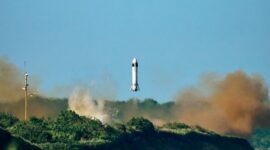
The success was the culmination of a tense 27.5-hour countdown and an intense 18-minute flight . As the rocket soared, leaving a trail of orange fumes, it carried with it the hopes of a nation and vindication for the approximately 16,500 ISRO scientists, engineers, and support personnel who had been working tirelessly . The launch was witnessed by hundreds of students and space enthusiasts who gathered at Sriharikota, despite wet weather . Following the flawless deployment, ISRO Chairman Dr. V. Narayanan confirmed the satellite’s systems were healthy and its solar panels deployed successfully, adding that “the health of the satellite is perfectly alright” . He also announced that following this success, ISRO is planning six more launches this year . Union Minister Dr. Jitendra Singh hailed the mission as ‘Another giant leap for India in Space!’, underscoring the national pride and strategic importance of the achievement . With the “Naughty Boy” delivering a major win, India has not only overcome recent technical failures but has also placed a powerful, persistent guardian in the sky, ready to watch over the nation.